


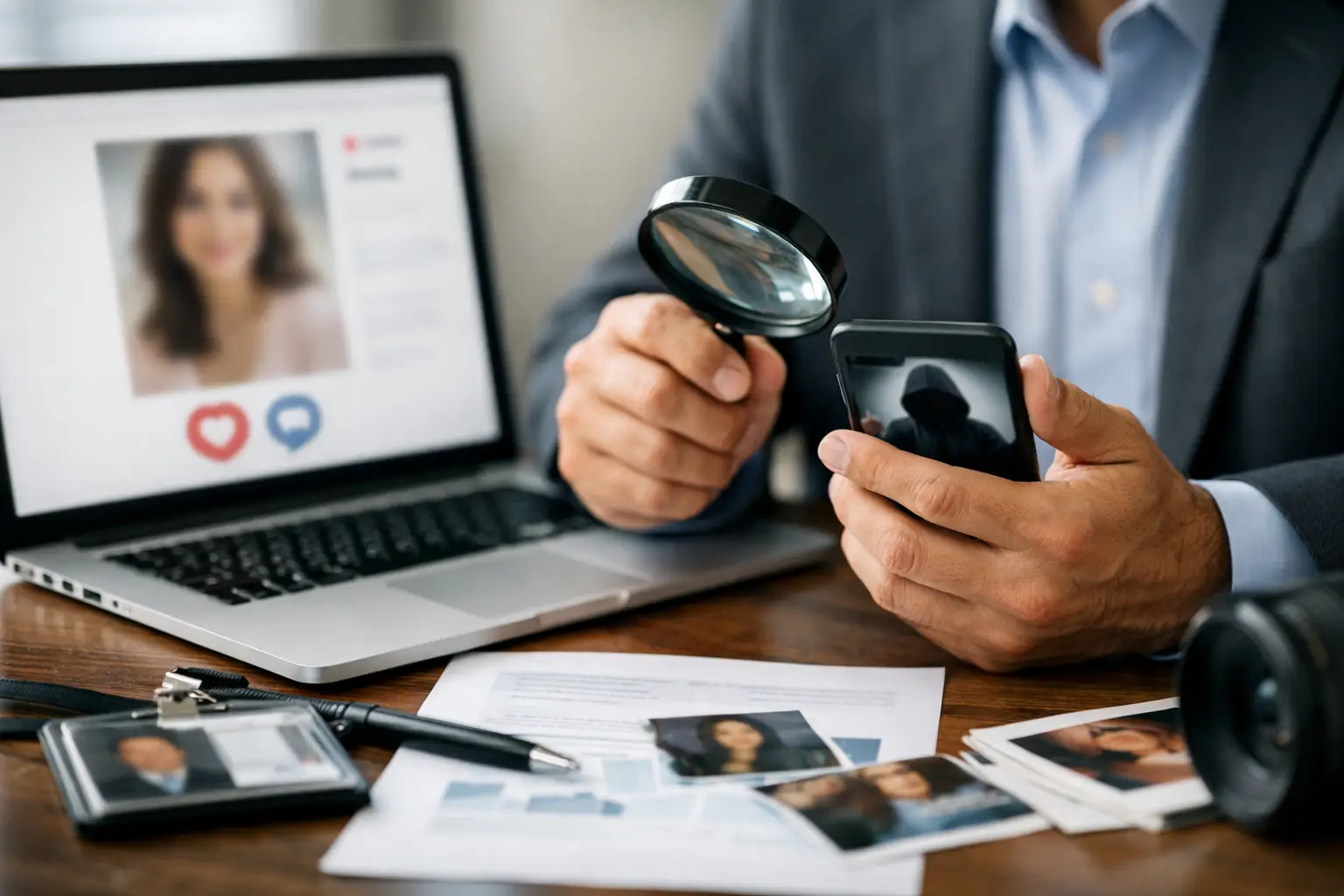
Online Dating Scam Investigation: What to Do
A convincing romance scam rarely begins with an obvious lie. It often starts with steady attention, thoughtful messages, and a person who appears to understand exactly what you need to hear. By the time money, personal information, or a request for secrecy enters the conversation, the emotional investment can be significant. An online dating scam investigation provides a structured way to determine who is behind the profile, preserve critical evidence, and make informed decisions without escalating the risk.
For many victims, the immediate question is not simply whether the person is real. It is whether the relationship, financial request, emergency, or promise of an in-person meeting can be verified. That answer should be based on facts, not pressure from the person on the other end of the screen.
When an Online Dating Scam Investigation Is Needed
Not every long-distance relationship is fraudulent, and not every person who avoids a video call is operating a scam. Military deployments, demanding travel schedules, family emergencies, and privacy concerns can be legitimate. What matters is the overall pattern and whether the explanation can be independently confirmed.
Concern is warranted when a dating profile moves quickly toward intense emotional commitment while remaining difficult to verify. A person may claim to work overseas, serve in the military, be an oil contractor, operate a business abroad, or be temporarily unable to access funds. These stories are often designed to explain why they cannot meet, why they need assistance, or why normal verification is supposedly impossible.
A professional investigation may be appropriate if you have sent money, shared identifying information, received suspicious photographs or documents, or believe the same individual is targeting someone you care about. It can also be valuable before sending funds, entering a business arrangement, sharing account access, or traveling to meet a person you only know online.
Warning Signs That Deserve Closer Attention
A single warning sign does not prove deception. Several signs appearing together should prompt caution. The most common indicators include a profile with limited history, photographs that look unusually polished or inconsistent, reluctance to participate in a live video conversation, and excuses that repeat whenever a meeting is discussed.
Financial requests are among the clearest concerns. The request may be framed as help with a medical emergency, travel expense, customs fee, cryptocurrency opportunity, legal problem, or a package that cannot be released without payment. Scammers frequently ask for gift cards, wire transfers, cryptocurrency, payment apps, or bank transfers because these methods can be difficult to reverse.
Pay attention to manipulation as well. A scammer may insist that the situation is urgent, tell you not to discuss it with friends or family, or suggest that skepticism proves you do not care. Genuine relationships do not require secrecy, panic, or immediate financial sacrifice.
What a Professional Investigation Can Verify
An experienced private investigator does more than run a name through a basic online search. The goal is to evaluate identity claims, digital behavior, and available evidence through lawful, defensible methods.
An investigation may examine whether profile images appear elsewhere online, whether names and contact details connect to credible records, and whether claimed employment, location, education, or military service can be substantiated. Investigators can also analyze social media activity, email addresses, phone numbers, payment requests, messaging patterns, and documents provided during the relationship.
In more complex matters, digital forensic methods can help preserve communications and identify relevant account information, metadata, or patterns that support a fraud assessment. If financial loss has occurred, investigators may assist with documenting the timeline, tracing available transaction details, locating associated assets where legally possible, and preparing organized information for legal counsel, financial institutions, or law enforcement.
There are limits. A reputable investigator will not promise to recover money that has already moved through anonymous accounts or overseas networks. They also will not hack accounts, impersonate someone online, or use unlawful methods to obtain private data. Credible results depend on legal investigative practices and carefully preserved evidence.
Preserve Evidence Before You Confront Anyone
People who suspect a scam often want to confront the person immediately. That reaction is understandable, but it can cause the scammer to disappear, delete accounts, change phone numbers, or destroy useful evidence. Before making accusations, preserve what you have.
Save full screenshots of messages, profile pages, emails, payment instructions, receipts, usernames, phone numbers, and images. Capture dates, timestamps, and account handles whenever possible. Keep original files rather than relying only on cropped screenshots. If you transferred funds, retain bank records, transaction confirmations, cryptocurrency wallet addresses, gift card receipts, and any instructions you were given.
Write a clear timeline while details are fresh. Include when contact began, the names used, major claims made, requests for money or information, platforms used, and every payment or attempted payment. A timeline helps an investigator quickly identify inconsistencies and helps preserve a reliable record if you later need to report the fraud.
Do not send additional funds in an attempt to prove loyalty, secure a promised repayment, or help the person return home. Do not share one-time verification codes, copies of your identification, bank credentials, Social Security number, or intimate images. If you have already shared sensitive information, change passwords, contact relevant financial institutions, and consider steps to protect your credit and accounts.
How Scam Investigations Protect More Than Money
Financial loss is serious, but romance fraud can also create identity theft, extortion, reputational damage, and family conflict. A scammer who receives a photo of a driver’s license, access to an email account, or personal answers to security questions may have enough information to attempt account takeovers or open fraudulent accounts.
Sextortion is another concern. Some dating scams move quickly toward intimate conversations, photos, or video exchanges. The person may later threaten to distribute private material unless payment is made. Victims should avoid negotiating with an extortionist or sending more money. Preserving the communications and obtaining professional guidance can be safer than trying to manage the threat alone.
For family members, the challenge can be especially sensitive. Telling a parent, sibling, or adult child that their online relationship may be fraudulent can lead to defensiveness or embarrassment. Verified facts are often more effective than arguments. An objective investigative report can replace speculation with information the family can discuss calmly.
Choosing the Right Investigator for a Dating Scam Matter
An online dating fraud matter involves privacy, technology, financial risk, and sometimes cross-border activity. Choose a properly licensed private investigation firm with experience in digital investigations, social media intelligence, financial fraud, and evidence handling. Ask how the firm protects confidentiality, what information it needs to begin, and what type of reporting you can expect.
Be cautious of anyone who guarantees an immediate identity, promises to recover every dollar, or asks you to send sensitive documents through unsecured channels. A professional firm should explain the scope of work clearly, discuss realistic limitations, and tailor the strategy to your situation.
Kay & Associates Investigations approaches sensitive fraud matters with discretion, lawful investigative methods, and the care required when trust has been exploited. The purpose is not to judge a client for believing someone. It is to establish facts, protect the client’s interests, and provide credible information for the next decision.
If You Have Already Sent Money
Act quickly, but do not assume the situation is hopeless. Contact the bank, card issuer, payment platform, or cryptocurrency exchange used for the transaction and report suspected fraud. Ask whether a transfer can be recalled, frozen, flagged, or documented. The chance of recovery depends on the payment method and how quickly the report is made.
Report the profile to the dating platform and preserve the confirmation. If your identity or finances may be compromised, monitor accounts closely and place appropriate fraud protections with the major credit bureaus. For substantial losses, repeated threats, impersonation, or fraud involving business accounts, consult qualified legal counsel and consider a licensed investigative assessment.
The most useful next step is usually a quiet, disciplined one: stop sending information, preserve the record, and let verified facts guide what happens next.








Locating and Serving a Person Hard to Find for Legal Action says: