


How Digital Investigators Preserve Phone Evidence
A phone can settle a custody dispute, expose financial misconduct, confirm harassment, or protect someone falsely accused. It can also be mishandled in a matter of minutes. That is why understanding how digital investigators preserve phone evidence matters so much. In high-stakes personal and legal matters, the difference between useful evidence and compromised data often comes down to what happens in the first hour.
Phones are not simple storage devices. They are active systems that constantly change. A new text arrives, an app refreshes in the background, location data updates, cloud accounts sync, and deleted material may be overwritten. If someone starts scrolling, screenshotting, forwarding messages, or plugging the phone into random software, they can alter metadata, damage context, or create questions a court or attorney will immediately notice.
How digital investigators preserve phone evidence from the start
Professional preservation begins before extraction. A trained investigator first evaluates the condition of the device, how it was obtained, who had access to it, and whether there is any immediate risk of remote wiping, encryption lockout, or ongoing data change. That early assessment shapes the preservation strategy.
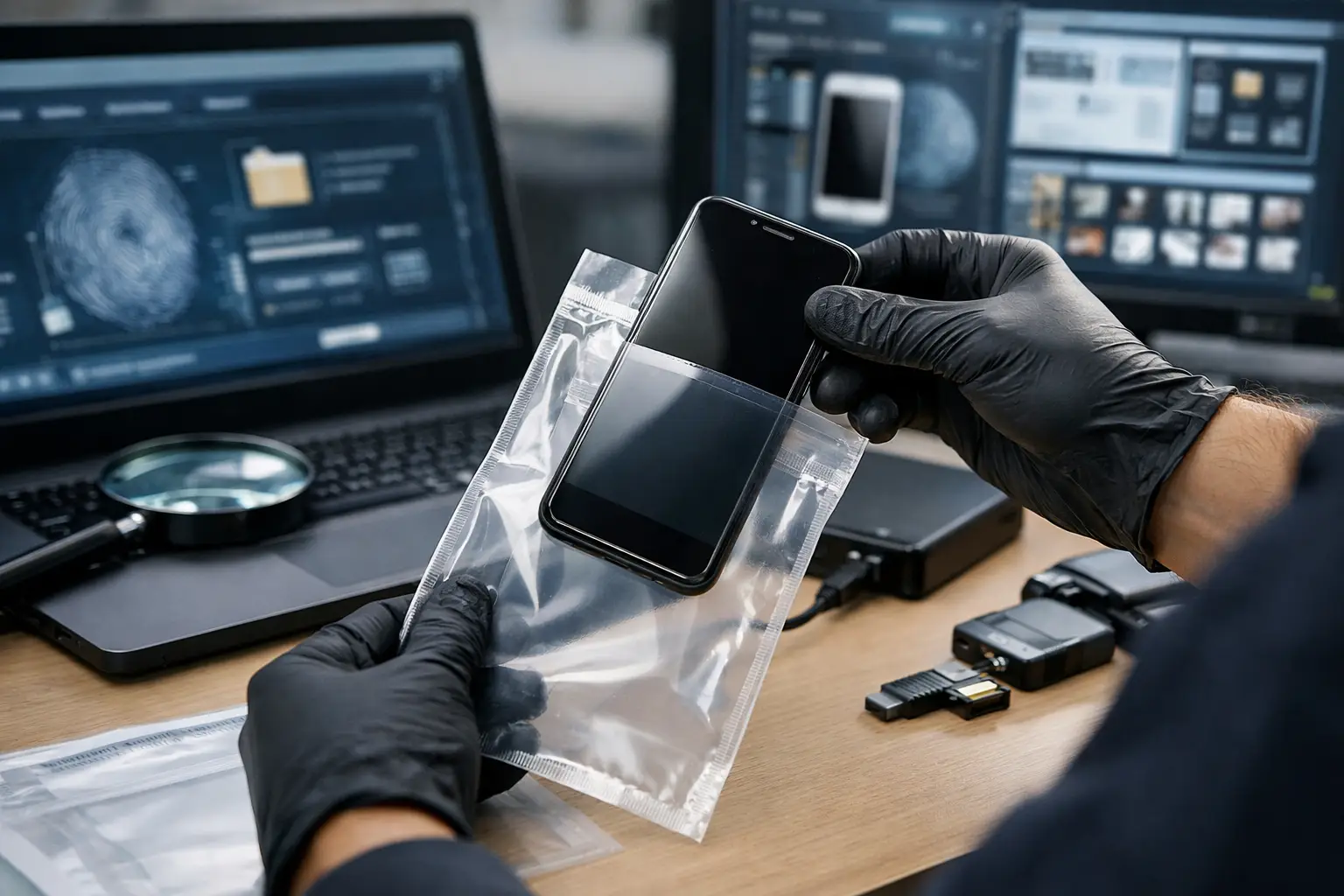
In many cases, the first priority is isolation. If a device remains connected to cellular service, Wi-Fi, or Bluetooth, new data can continue to arrive and existing data can be modified. Investigators may place the phone in airplane mode if doing so will not trigger security issues, disable communications in a controlled manner, or use shielding methods designed to prevent outside signals from reaching the device. The goal is straightforward – stop unnecessary changes without causing new ones.
At the same time, the device itself is documented carefully. Investigators record the phone’s make, model, visible condition, identifying information, date and time of collection, and who transferred possession. Photographs are often taken of the device, screen state, accessories, and any visible notifications. This is not paperwork for its own sake. It establishes the beginning of chain of custody and helps show that the evidence presented later is the same evidence originally collected.
Chain of custody is as important as the data
Clients often focus on the content of a phone – texts, photos, call logs, app data, browser history, location records. Attorneys and courts focus just as heavily on how that content was handled. If there is a gap in possession, unclear access, undocumented transfer, or signs that multiple people manipulated the phone, the value of the evidence can drop quickly.
Chain of custody is the documented record of who had the device, when they had it, how it was stored, and what was done to it. Digital investigators preserve phone evidence by treating the device like any other potentially critical exhibit. Every transfer is logged. Every examination step is documented. Storage conditions are controlled. Access is restricted.
That discipline matters in divorce cases, workplace investigations, fraud matters, criminal defense support, and civil litigation. Opposing counsel does not need to prove the evidence is false to create problems. They may only need to raise doubt about whether the evidence was altered, selectively captured, or taken out of context.
Preservation is not the same as a casual backup
A common mistake is assuming a cloud backup, a screenshot folder, or a copied photo album counts as proper preservation. Sometimes those items are useful leads. They are not the same as forensic preservation.
A casual backup may omit deleted data, system logs, app artifacts, timestamps, and account-level information. Screenshots can be challenged because they do not always show full context, source authenticity, or metadata. Even when the visible content is accurate, the method of collection may be weak.
Forensic preservation aims to collect data in a way that is repeatable, defensible, and minimally invasive. Depending on the device and legal authority involved, that may include a logical extraction, a file system extraction, or a more advanced acquisition method. Each has trade-offs. A logical extraction may be less intrusive and faster, but it may not capture everything. A deeper extraction may reveal more artifacts, though it may also depend on the phone model, operating system, encryption status, and legal scope.
That is where experience matters. There is no single technique that fits every phone or every case.
The role of forensic tools and controlled methods
Professional digital investigators use specialized forensic tools designed to acquire and analyze mobile data without the casual contamination that often comes from consumer software. The software matters, but the process matters more. A tool is only as reliable as the person using it.
Before extraction, investigators consider passcode status, battery condition, operating system version, app behavior, and whether opening the device could trigger changes. They also consider whether preserving volatile data is urgent. Some information may disappear if the phone powers down, loses session state, or logs out of encrypted applications.
Once a collection method is selected, the extraction is performed in a controlled environment. The output is then preserved with verification methods such as hashing, which helps confirm that the collected data remains unchanged after acquisition. Working copies are used for review whenever possible, while the preserved original remains protected.
This distinction is critical. Serious investigators do not examine the only copy and hope for the best. They preserve the original evidence set, verify it, and conduct analysis from controlled duplicates.
How digital investigators preserve phone evidence without losing context
Context is one of the first casualties of amateur evidence collection. A single screenshot of a text can miss the sender details, surrounding messages, time sequence, linked media, or related app activity. A photo copied out of a device can lose the metadata showing when it was created, modified, or shared. A call log written down by hand may leave out duration, frequency, or associated contacts.
Digital investigators preserve phone evidence with context in mind. That means collecting not just isolated items, but the surrounding data that helps explain what happened. In a harassment case, that may include message threads, contact records, call timing, voicemails, screenshots found on the device, and app usage patterns. In a fraud case, it may involve financial app activity, email access, authentication messages, and geolocation artifacts that help place events in time.
Context can help a client. It can also hurt a claim. A seasoned investigator understands both possibilities and preserves the record objectively. Credible work is not built on cherry-picking. It is built on complete, defensible collection.
Legal boundaries shape what can be preserved and how
Not every phone can be examined simply because someone wants answers. Ownership, consent, employer policy, shared access, court orders, and privacy law all matter. A spouse’s suspicion, a business concern, or a family conflict does not automatically create lawful access.
That is why professional investigators start with authority and scope, not curiosity. If the collection itself is unlawful, the evidence may become unusable and the person seeking it may create new legal exposure. In California especially, privacy issues can become serious very quickly.
A licensed investigative firm with digital forensics experience understands that evidence handling is not separate from legal defensibility. It is part of it. At Kay & Associates Investigations, this is exactly why phone evidence is approached with caution, documentation, and case-specific strategy rather than guesswork.
What clients should do before handing over a phone
If you believe a phone contains important evidence, resist the urge to search through it further. Do not delete anything, do not install cleanup apps, and do not attempt a home extraction with whatever software appears first in a search result. If the device is unlocked, keep it secure. If it is locked, do not keep guessing passcodes until the device risks a security lockout.
Write down what you know separately. Note who used the phone, why you believe relevant data is on it, key dates, and any urgent concerns such as threats, remote access, or account tampering. That information can help an investigator prioritize preservation without changing the phone itself.
If the matter may lead to court, a workplace action, or attorney review, move quickly. Delay can mean overwritten data, expired app logs, lost cloud synchronization records, or avoidable challenges to authenticity.
The safest evidence is not the evidence collected fastest. It is the evidence preserved correctly the first time. When a phone may hold the truth, careful handling protects more than the data. It protects your position, your credibility, and your ability to use that evidence when it matters most.







Locating and Serving a Person Hard to Find for Legal Action says: