


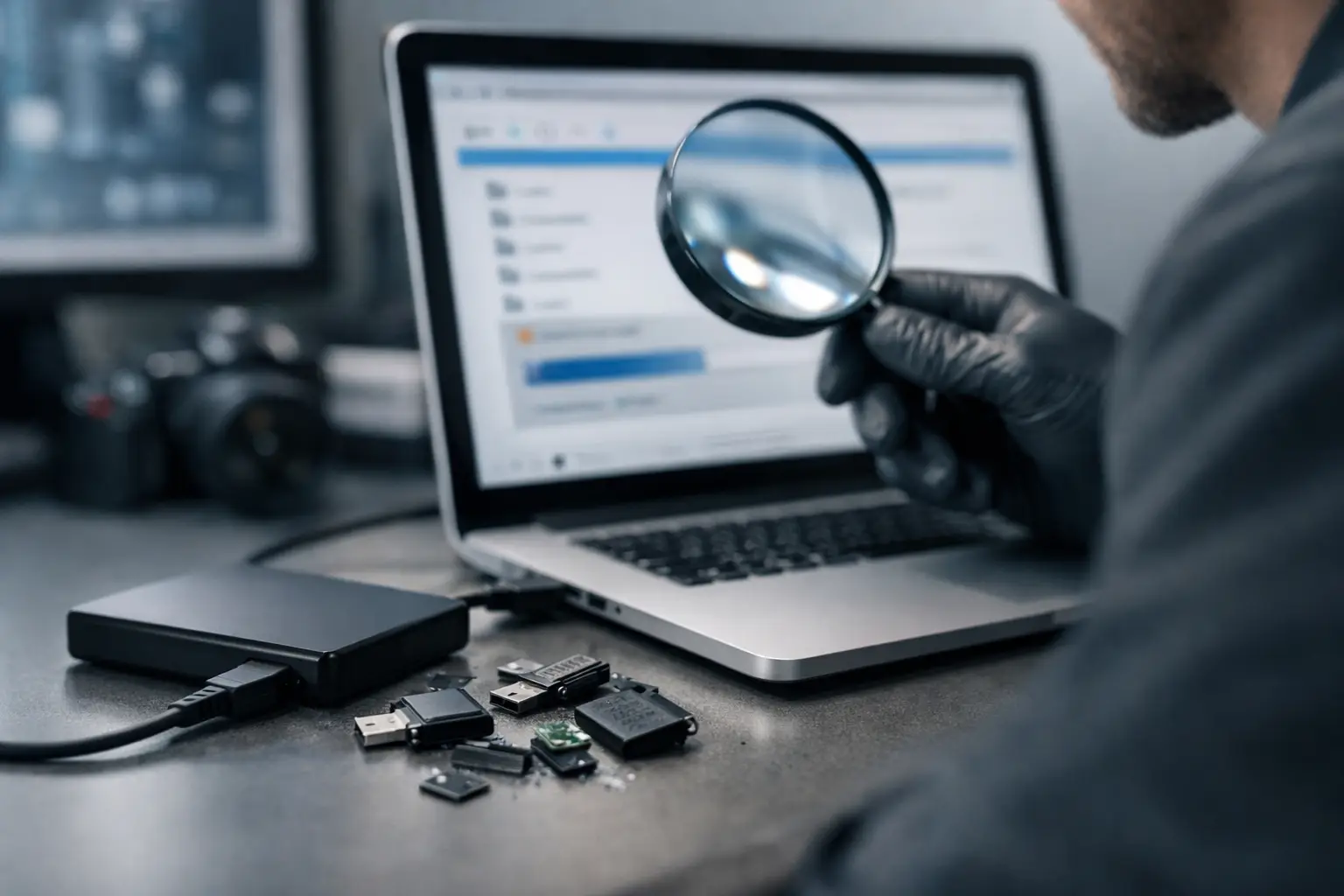
Can Investigators Recover Deleted Files?
A spouse wipes a phone before a divorce filing. An employee deletes spreadsheets after a fraud complaint. A business partner says the records are gone. In cases like these, the question is immediate and practical: can investigators recover deleted files? Often, yes. But the real answer depends on where the data lived, how it was deleted, what happened afterward, and whether the recovery is handled with proper forensic methods.
Deleted does not always mean destroyed. In many situations, a file is removed from normal view, but the underlying data may still exist on a device, a server, a backup, or within related system records. That is why digital forensics can be so valuable in civil disputes, internal investigations, family law matters, and criminal defense support. At the same time, there are limits. Some files are permanently overwritten, encrypted beyond access, or erased through secure deletion tools designed to make recovery far more difficult.
Can investigators recover deleted files from any device?
Investigators can often recover deleted files from computers, smartphones, tablets, external drives, cloud accounts, email platforms, and business systems. The device or account matters because each stores and manages deleted data differently.
On a traditional computer hard drive, deleted files may remain recoverable if the storage space has not been reused. On solid-state drives, recovery can be more complicated because of how those drives manage deleted blocks. Phones introduce another layer of difficulty. Modern smartphones use encryption, app-level storage, and operating system protections that can limit what is accessible even to experienced professionals. Cloud services may preserve deleted content for a limited time, keep version histories, or retain account logs that show what was removed and when.
This is why experienced investigators do not make blanket promises. A seasoned forensic team evaluates the specific device, operating system, account environment, and user activity before estimating the likelihood of recovery.
What makes deleted file recovery possible
When someone deletes a file, the system often marks that space as available rather than immediately erasing every bit of the underlying content. Until new data overwrites it, fragments or complete copies may remain. Investigators may also find traces outside the original file location, including temporary folders, cache files, synced devices, email attachments, print spool records, thumbnails, metadata, logs, or backup repositories.
In many investigations, the file itself is only part of the evidence. The surrounding digital footprint can matter just as much. A deleted spreadsheet may still be referenced in email correspondence. A removed image may survive in cloud sync history. A wiped message thread may still leave timestamps, contact records, or notification artifacts that help establish what occurred.
That broader perspective is what separates professional digital forensics from casual recovery software. The goal is not just to retrieve data. It is to identify, preserve, and interpret evidence in a way that supports the facts.
Timing matters more than most people realize
The longer a device stays in use after deletion, the lower the odds of successful recovery in many cases. New downloads, software updates, app activity, and even routine background processes can overwrite areas where deleted data once remained.
That is why speed matters. If deleted files may be relevant to litigation, a family law dispute, a corporate investigation, or suspected misconduct, delaying action can cost you evidence. The safest approach is to stop normal use of the device and have it assessed by a qualified investigator or forensic specialist as early as possible.
When recovery is difficult or impossible
There are situations where even skilled investigators may not be able to restore deleted files. Secure wipe tools can intentionally overwrite data. Full-disk encryption can block access when credentials are unavailable. Some apps store little or no recoverable content locally. Remote wiping can remove accessible evidence from a device before imaging occurs. Physical damage can also complicate collection.
Solid-state storage deserves special mention. Many newer laptops and phones use storage systems that clear deleted data more aggressively than older devices. That does not mean recovery is hopeless, but it does mean the old assumption that deleted equals recoverable is less reliable than it once was.
Cloud platforms also create trade-offs. They may preserve data longer than a local device, but access can depend on credentials, legal authority, retention settings, and provider policies. In other words, the answer is often yes, maybe, or not directly, depending on the source.
Can investigators recover deleted files for court use?
Recovery alone is not enough if the evidence may be used in court. The collection process must be defensible. That means preserving the original source, documenting how data was acquired, maintaining chain of custody, and avoiding methods that alter or contaminate the evidence.
This is where licensed investigators and forensic professionals add real value. A file recovered through careless handling can invite challenges from opposing counsel. A file recovered through sound forensic procedures carries far more weight. The same applies to text messages, emails, photos, financial records, browser history, and account activity logs.
For attorneys, employers, and private clients, this distinction is critical. You are not simply trying to see whether something can be found. You are trying to determine whether the findings will stand up under scrutiny.
The legal and ethical line matters
Not every device can be searched just because someone suspects wrongdoing. Ownership, consent, employment policies, account permissions, privacy laws, and pending litigation all affect what can legally be collected. Spouses, business partners, and employers often assume they have more access rights than they actually do.
A professional investigator should evaluate those issues before any collection begins. That protects the client, the case, and the usefulness of the evidence. Cutting corners can damage all three.
Common situations where deleted data becomes central
Deleted file recovery is frequently relevant in divorce and infidelity matters, child custody disputes, employee misconduct cases, fraud investigations, partnership conflicts, and missing asset matters. In those cases, the deleted content may include communications, financial documents, location data, photos, call records, spreadsheets, or internal business files.
Sometimes the deletion itself becomes evidence. If a person removed records right after receiving a legal notice, after a dispute escalated, or during an internal review, that timing may be significant. Even when the original file cannot be fully restored, forensic analysis may still show that it existed, when it was accessed, and when it was deleted.
That kind of timeline can be extremely valuable. It helps move a case from suspicion to documented fact.
What clients should do if they suspect evidence was deleted
Do not keep using the device as usual, and do not try multiple consumer recovery tools out of frustration. Well-meaning attempts can overwrite data, alter timestamps, or create confusion about what was original. Preserve the device, gather basic context about who used it and when, and speak with a qualified investigator promptly.
If the issue involves a business, take steps to preserve related systems as well. That may include email accounts, cloud drives, shared folders, mobile devices, and backups. If litigation is likely, legal counsel may need to issue preservation instructions quickly. In many matters, early coordination between counsel and a forensic investigator produces the strongest result.
For private individuals, discretion matters just as much as speed. Sensitive cases involving family, relationships, or financial disputes should be handled carefully. A rushed confrontation can lead to more deletion, account lockouts, or remote wiping before evidence is secured.
Why professional recovery is about more than technology
The technical side of deleted file recovery matters, but so does judgment. An experienced investigator knows which devices to prioritize, which accounts may hold duplicate evidence, what legal issues must be considered, and how to document findings so they are actually useful. That combination of technical skill and investigative discipline is what clients are really hiring.
At Kay & Associates Investigations, matters involving deleted data are approached with that larger reality in mind. Whether the issue is personal, corporate, or litigation-related, the objective is not guesswork. It is verified information, collected discreetly and handled in a way that protects the client’s position.
If you believe relevant files were deleted, the key question is not whether the other party says they are gone. The better question is whether the evidence was truly destroyed, or simply removed from view. Those are not the same thing, and the difference can change the direction of a case.










Locating and Serving a Person Hard to Find for Legal Action says: