


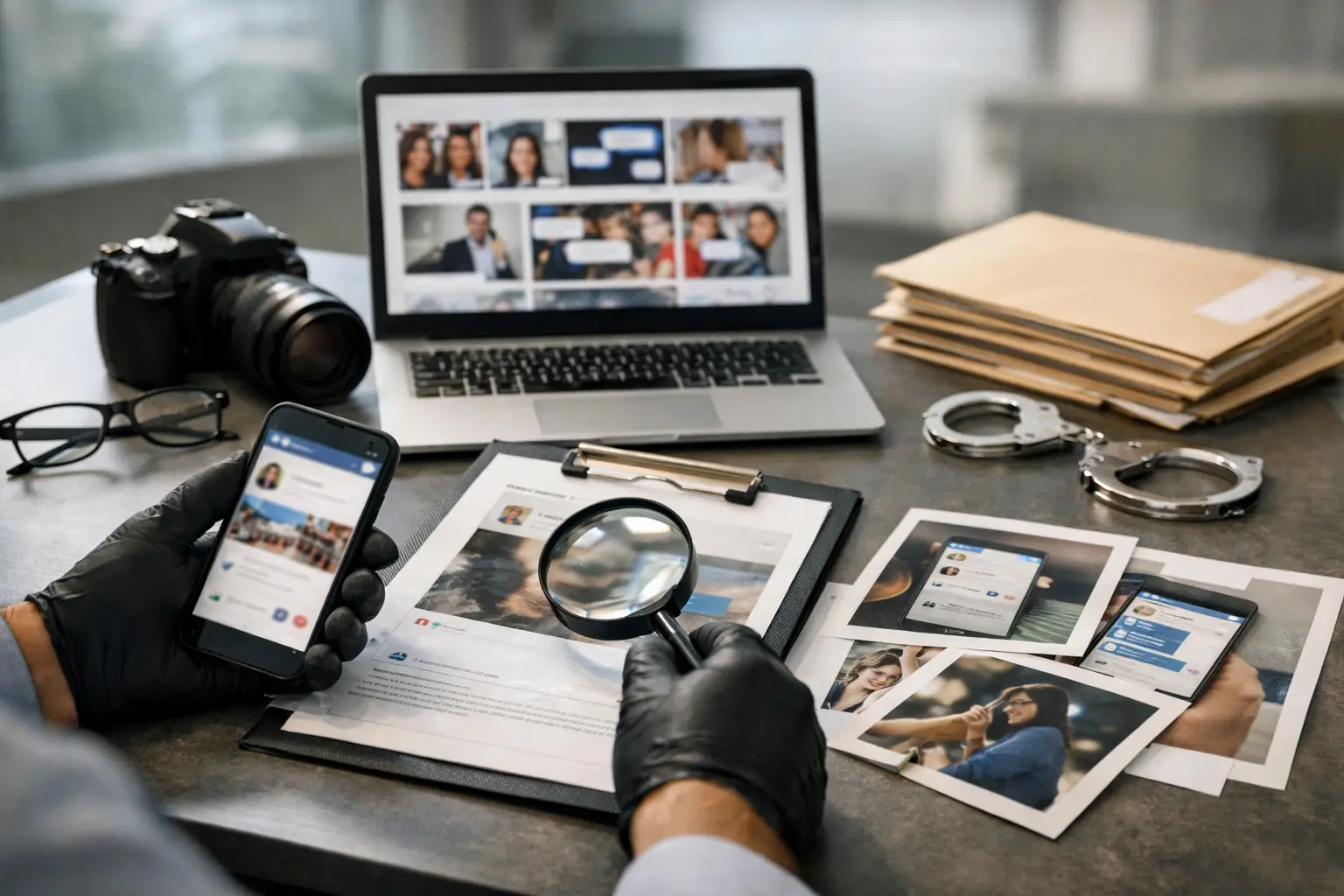
Social Media Evidence Collection That Holds Up
A post disappears. A story expires. A profile is renamed, edited, or set to private. That is why social media evidence collection is rarely as simple as taking a screenshot and saving it to your phone. When a family dispute, fraud claim, custody matter, workplace issue, or civil case turns on online activity, the difference between useful information and credible evidence is usually the way it was collected, preserved, and explained.
For many clients, the first instinct is to start gathering everything themselves. That impulse is understandable. The problem is that rushed collection can create gaps, raise authenticity questions, or cross legal lines. Social media moves fast, but evidence still has to be handled carefully if you expect it to carry weight with an attorney, insurer, employer, or court.
What social media evidence collection actually means
Social media evidence collection is the process of identifying relevant online content, preserving it in a way that reflects what appeared on the platform, documenting where it came from, and maintaining records that support authenticity. That can include posts, comments, messages, photos, videos, usernames, timestamps, geotags, follower relationships, profile changes, and patterns of activity across multiple platforms.
The key point is that context matters as much as content. A single screenshot may show a statement, but it often does not show the account history, the date format, the URL path, whether the content was edited, or how it connects to the person in question. In investigations, those details are often where credibility is won or lost.
This is especially true in matters involving infidelity, child custody, harassment, asset concealment, employee misconduct, fraud, or criminal defense support. Online behavior can reveal associations, movements, timing, contradictions, and intent. It can also be misleading if taken out of context.
Why screenshots alone are often not enough
Screenshots have value, but they are only one piece of the record. They can be cropped, altered, stripped of metadata, or challenged as incomplete. Even when a screenshot is genuine, it may fail to show enough surrounding information to prove whose account it was, when it was captured, or whether the post was part of a longer exchange.
A stronger collection process usually includes the visible content, the date and time of capture, identifying account information, the platform source, and notes explaining how the investigator located and preserved it. In some cases, it also means repeated captures over time to document deletions, edits, or ongoing conduct.
That is where professional handling matters. A licensed investigator does not just save what looks suspicious. The work involves preserving what is there, recording how it was found, and anticipating how another party may try to dispute it later.
Social media evidence collection in legal and personal cases
In personal cases, social media often fills in the gaps left by direct conversations. Someone may deny contact with another person, deny travel, deny substance use, or deny exposing a child to certain environments. Public posts, tagged photos, comments from friends, and location clues may tell a different story. In custody matters, for example, the issue is not whether a parent posted something embarrassing. The issue is whether the content speaks to judgment, safety, stability, or truthfulness.
In professional matters, the stakes can be just as high. A business may suspect internal theft, false injury claims, vendor fraud, reputational attacks, or policy violations. An attorney may need online evidence to support impeachment, timeline reconstruction, or witness verification. A bank or corporate client may need open-source intelligence tied to asset location or fraudulent representation. In each setting, the collection must be methodical because the audience reviewing it will be skeptical by design.
The legal line: public information versus improper access
This is where many people make costly mistakes. There is a major difference between reviewing publicly available information and attempting to gain access through deception, coercion, or unauthorized entry. Sending fake friend requests, using someone else’s credentials, impersonating another person, or bypassing privacy settings can create legal exposure and damage a case.
Lawful social media evidence collection depends on the facts, the platform, and the purpose of the investigation. What is acceptable in one setting may be improper in another. A licensed investigations firm understands those limits and works within them. That protects both the integrity of the evidence and the interests of the client.
It also matters because evidence is not useful if the method used to obtain it creates a bigger problem. A client may feel pressure to act quickly, but quick is not the same as admissible, persuasive, or safe.
What a professional collection process should include
A credible process starts with scope. What exactly are you trying to prove or disprove? Without a clear objective, investigators can collect too much irrelevant material and miss the content that actually matters. In a divorce matter, the focus may be undisclosed relationships, travel, spending, or cohabitation indicators. In a fraud case, it may be identity links, business affiliations, or false representations that conflict with claims.
Next comes preservation. That means capturing the content in a way that reflects the source accurately and thoroughly. It often includes multiple views of the same material, profile-level details, timestamps, and surrounding context. If posts are likely to disappear, speed matters, but so does discipline.
Then comes documentation. Investigators should maintain clear records of when the content was observed, how it was accessed, what device or method was used, and how the material was stored. This can support later testimony, reporting, or coordination with counsel.
Finally, there is analysis. Not every post means what it appears to mean at first glance. A photo may be old. A tagged location may be inaccurate. A username may belong to a different person with a similar name. Experienced investigators verify identity, cross-reference details, and separate strong indicators from weak assumptions.
Why timing matters in social media investigations
Digital evidence is fragile in a different way than physical evidence. It can vanish without warning, but it can also mutate. A profile picture changes. A caption is edited. A friend list becomes hidden. A reel expires. A message thread is deleted on one side and not the other. Delay can cost you the chance to document a pattern accurately.
That does not mean every situation calls for immediate escalation. It does mean early consultation is often smart when online conduct may become relevant to litigation, internal action, or a family court proceeding. The sooner a strategy is set, the better the chance of preserving useful evidence before it shifts.
Common mistakes that weaken online evidence
The most common mistake is assuming that more is always better. Volume does not equal relevance. A thousand screenshots with no dates, no source notes, and no explanation can be less useful than a small set of properly preserved records.
Another mistake is engaging with the subject online. Commenting, messaging, confronting, or trying to bait a response can tip off the person and cause evidence to disappear. It can also complicate later claims about harassment, witness influence, or retaliation.
A third problem is failing to connect the account to the individual. Similar names, fake accounts, parody pages, and shared devices can all muddy attribution. Professional investigators look for corroboration before drawing conclusions.
When to bring in a licensed investigator
If the online activity could affect custody, divorce strategy, a fraud inquiry, an employment matter, a civil dispute, or criminal defense support, professional involvement is often the safer route. The same is true when the subject is likely to delete content, when multiple platforms are involved, or when identity verification is not straightforward.
An experienced firm such as Kay & Associates Investigations approaches these matters with a clear chain of documentation, legal awareness, and discretion that clients often cannot replicate on their own. That is not about making a simple task sound complicated. It is about recognizing when evidence may need to withstand scrutiny from attorneys, opposing parties, insurers, or the court.
Social media can reveal a great deal, but it rarely speaks for itself. Posts need context. Accounts need verification. Patterns need explanation. And clients need protection while the facts are being established.
If you believe online content may matter to your case, treat it as potential evidence from the start, not just information you happened to notice. The right next step is not always aggressive action. Often, it is careful preservation before the window closes.







Locating and Serving a Person Hard to Find for Legal Action says: