


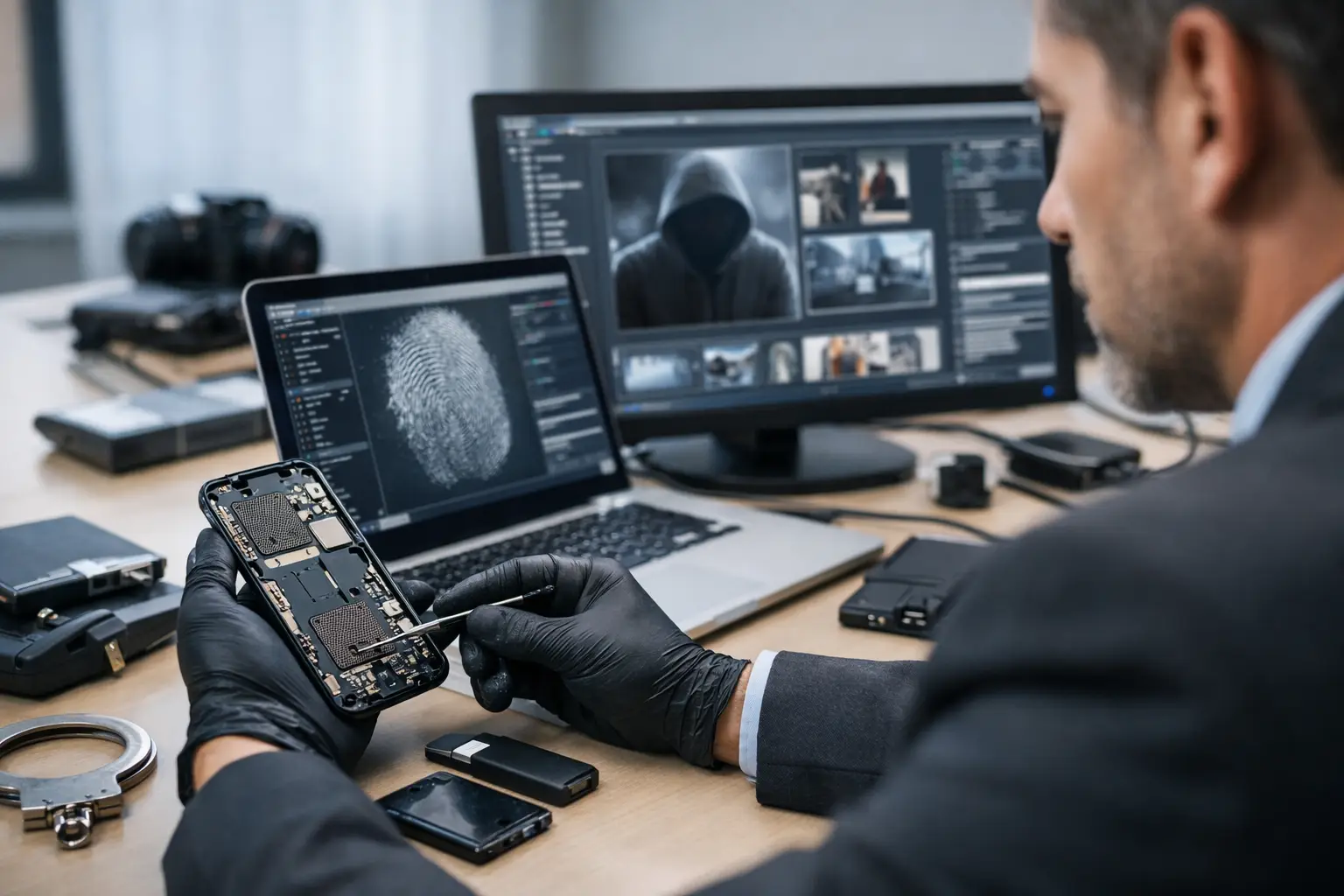
How Digital Forensics Supports Cases
A deleted text thread, a wiped laptop, a suspicious login from an unfamiliar city – these details often become the turning point in a legal or personal dispute. Understanding how digital forensics supports cases starts with a simple reality: phones, computers, cloud accounts, and apps record behavior in ways people rarely see until a dispute, allegation, or loss forces the issue.
For clients facing divorce, custody disputes, fraud, employee misconduct, harassment, or litigation, digital evidence can clarify timelines, identify who accessed what, and preserve information before it disappears. It can also expose when a story does not match the underlying data. That matters because assumptions do not hold up under scrutiny. Verified evidence does.
How digital forensics supports cases in real terms
Digital forensics is not guesswork and it is not casual online searching. It is a structured investigative process used to identify, preserve, recover, analyze, and report digital evidence in a way that can withstand legal review. In the right case, that process can answer questions that witnesses cannot, especially when memories are incomplete, accounts conflict, or someone has intentionally tried to hide conduct.
A properly handled forensic examination may reveal deleted messages, document history, login records, browser activity, file transfers, metadata, geolocation artifacts, or signs of tampering. Just as important, it can show what did not happen. That distinction matters in civil disputes, internal corporate investigations, and criminal defense support, where an unsupported accusation can carry serious consequences.
The value is not only in finding data. It is in connecting data to a timeline, a device, a user pattern, or a disputed event. Raw information alone is rarely enough. Courts, attorneys, businesses, and private clients need findings explained clearly and backed by defensible methods.
Where digital forensic evidence often matters most
Some cases are built around digital activity from the start. Others become digital cases once a device, account, or communication record enters the picture.
In family law matters, forensic work may help establish concealed communications, hidden financial activity, or patterns relevant to custody concerns. In infidelity investigations, digital evidence can sometimes support or refute claims involving messaging apps, location history, rideshare records, photos, or alternate accounts. These matters are emotional, but the evidence still needs to be handled with discipline. A client who tries to collect it alone can easily compromise both the device and the value of the proof.
In business disputes, digital forensics may uncover data theft, unauthorized access, expense manipulation, insider activity, or efforts to erase company information before a departure. For banks, corporations, and small businesses, speed matters. The longer a compromised device or account remains active without preservation, the greater the chance that relevant evidence will be altered, overwritten, or lost.
In litigation support, digital analysis can help attorneys challenge a timeline, authenticate a communication, test a witness statement, or identify missing records. In criminal defense support, it can reveal whether data was altered, whether a device was actually used at a claimed time, or whether another person had access.
The process behind credible digital forensics
Clients often assume the key step is recovering deleted data. In practice, preservation usually comes first. If evidence is not collected properly, even accurate findings can face avoidable challenges.
A professional forensic process typically begins by identifying the likely evidence sources. That may include mobile phones, laptops, tablets, external drives, email accounts, cloud storage, social media activity, business systems, or app data. From there, investigators work to preserve the data in a forensically sound manner, often by creating an exact forensic image or otherwise capturing information without changing the original source more than necessary.
After preservation, the examination focuses on the issues that matter to the case. This is where strategy matters. Not every case requires a full device analysis. Sometimes the goal is narrow and time-sensitive, such as confirming whether files were copied to a USB device before an employee resignation. In other matters, the scope is broader, involving communication patterns, deleted content, account access history, and event reconstruction over weeks or months.
The final stage is reporting. A strong report does more than list artifacts. It explains what was found, how it was found, what the findings mean, and where limits remain. Good forensic work includes restraint. If the data does not support a conclusion, the report should say so plainly.
Why chain of custody and legal handling matter
One of the clearest examples of how digital forensics supports cases is its role in protecting evidence from challenge. That is where chain of custody becomes critical.
Chain of custody documents who handled the evidence, when it was collected, how it was stored, and what steps were taken during analysis. Without that record, opposing counsel can argue that data was altered, mishandled, or taken out of context. In a high-stakes dispute, that challenge can weaken an otherwise strong case.
This is also why self-help is risky. A spouse who guesses a passcode and starts scrolling, a business owner who opens files on a suspect laptop, or an employee who forwards account contents to a personal email may think they are preserving proof. Instead, they may change timestamps, trigger sync activity, violate privacy boundaries, or create admissibility problems. Evidence that feels obvious to a client can become complicated once legal standards apply.
Licensed professionals understand that the best evidence is not just persuasive. It is defensible.
What digital forensics can and cannot prove
Digital evidence is powerful, but it is not magic. A recovered message may show a communication happened, but not always who physically typed it. Location artifacts may place a device in an area, but not always establish intent. Browser history may suggest research activity, but context still matters.
That is why experienced investigators do not treat one artifact as the whole story. They compare sources, test consistency, and look for corroboration. A message, location point, deleted image, file access log, and witness statement together may form a reliable pattern. Any single item on its own may be incomplete.
There are also limits based on encryption, overwritten data, remote wiping, application design, and the condition of the device. Some information cannot be recovered. Some can be recovered only partially. A credible investigator sets expectations honestly rather than promising results no one can guarantee.
Why timing changes the outcome
In digital matters, delay is often the enemy. Devices continue to update. Cloud accounts sync. Apps rotate logs. Users delete conversations, replace phones, reset accounts, or lose access credentials. Even routine use can overwrite potentially relevant information.
That does not mean every delayed case is hopeless. It does mean early action gives investigators more options. If litigation is likely, preservation steps should be considered as soon as possible. If a business suspects internal theft or unauthorized access, containment and documentation should happen before employees are alerted carelessly. If a family law matter may hinge on device evidence, strategy should be discussed before anyone starts examining the device informally.
Urgency should still be balanced with legality. Fast action is useful only if the collection is lawful and the findings can stand up later.
Choosing the right investigative partner
Digital forensics should not be separated from the broader case strategy. The best results usually come when forensic analysis is aligned with the actual issue in dispute, whether that issue is custody, fraud, asset concealment, harassment, or litigation support.
That is why clients often benefit from working with an investigative firm that understands both evidence handling and case context. A technically skilled examiner who does not understand litigation needs may miss what matters most. On the other hand, a general investigator without forensic discipline may recognize suspicious behavior but fail to preserve the proof correctly.
For many clients, especially those dealing with deeply personal or reputationally sensitive matters, discretion matters just as much as technical skill. At Kay & Associates Investigations, that balance of confidentiality, case-specific strategy, and professional evidence handling is central to the work. Sensitive cases require more than answers. They require answers that are gathered the right way.
When clients ask how digital forensics supports cases, the best answer is this: it turns hidden activity into usable facts. And when decisions about family, finances, business exposure, or legal risk are on the line, facts gathered carefully are often what allow the next step to be taken with confidence.










Locating and Serving a Person Hard to Find for Legal Action says: