


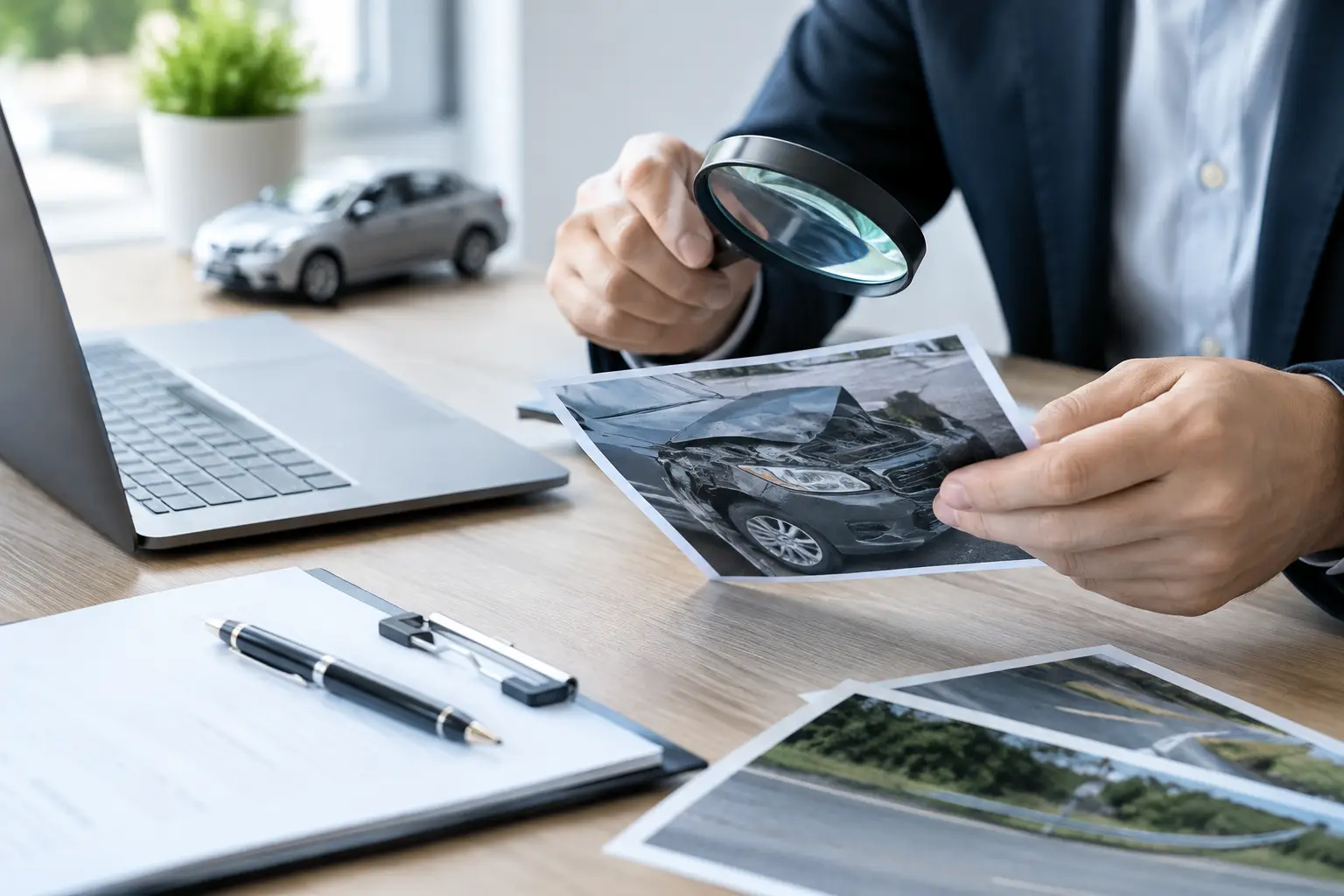
A Guide to Insurance Fraud Evidence That Holds Up
A single photograph, a conflicting statement, or a repair estimate that does not match the reported damage can change the direction of an insurance dispute. But suspicion is not proof. This guide to insurance fraud evidence explains how individuals, businesses, and legal teams can identify, preserve, and develop information that is credible enough to support a claim decision, internal investigation, or litigation strategy.
Insurance fraud can involve a staged accident, inflated property damage, false injury claims, concealed assets, workers’ compensation abuse, arson, application misrepresentation, or a dishonest vendor. The details differ, but the investigative standard remains the same: collect facts lawfully, verify them independently, and preserve them so their origin and meaning can be explained.
What Makes Insurance Fraud Evidence Credible?
Credible evidence does more than appear convincing. It answers practical questions: Who created it? When was it obtained? Has it been altered? Can another person verify it? Does it fit with objective records and the known timeline?
For example, a claimant’s social media post may appear inconsistent with a reported injury. On its own, it may be incomplete or misleading. A professional investigation compares that post with dates of loss, medical restrictions, surveillance conducted in lawful public locations, employment records available through proper channels, witness accounts, and other relevant facts. The strength comes from the corroboration, not from one dramatic image.
The most useful evidence is also collected with the eventual audience in mind. An insurance carrier may need documentation for a special investigations unit review. A business may need reliable facts before making an employment decision. An attorney may need evidence that can withstand scrutiny in a deposition or courtroom. Each situation requires a tailored approach.
A Guide to Insurance Fraud Evidence: Start With Preservation
Many cases are weakened before an investigator is ever called because useful information is deleted, overwritten, or handled carelessly. Preservation should begin as soon as a legitimate concern arises.
Keep original documents, photographs, video files, emails, text messages, invoices, claim forms, repair estimates, and voicemail recordings in their native form whenever possible. Do not crop screenshots, add annotations to original images, edit video clips, or forward files repeatedly if it can be avoided. Make working copies for review and retain the originals in a secure location.
Create a simple chronology while events are still fresh. Record dates, times, locations, participants, and the source of each piece of information. Separate what you personally observed from what someone else told you. That distinction matters. A contemporaneous note stating that a witness reported seeing a vehicle undamaged on a particular date is more useful than a vague recollection assembled months later.
For businesses, place an appropriate hold on relevant records. This may include security footage, timekeeping data, fleet GPS records, point-of-sale logs, vendor communications, access-control records, and maintenance files. Surveillance systems commonly overwrite footage within days or weeks. If a loss involves a commercial location, delay can be expensive.
The Evidence Categories That Often Matter Most
Insurance fraud cases are fact-specific, and no single category automatically proves misconduct. Still, investigations commonly rely on several types of evidence working together:
- Claim and financial records: Applications, proofs of loss, invoices, receipts, bank records obtained through lawful process, prior claim information, and ownership documents can reveal discrepancies in value, timing, or insurable interest.
- Physical and scene evidence: Accident-scene photographs, vehicle damage patterns, fire-origin findings, property condition reports, repair records, and documented inspections can test whether a reported event is physically plausible.
- Digital evidence: Publicly available social media content, metadata, emails, device data collected with proper authority, website listings, and relevant communications may establish timelines, identities, or contradictory representations.
- Witness and subject information: Statements from witnesses, neighbors, coworkers, vendors, responding personnel, or other knowledgeable parties can clarify what happened before and after a reported loss.
- Lawful surveillance: Properly conducted surveillance may document activity, associations, vehicle use, or work behavior that conflicts with a material claim representation.
A useful investigation does not simply collect more material. It identifies which facts are material to the claim. A claimant performing an ordinary activity may not contradict a genuine injury. The question is whether the documented conduct is inconsistent with specific restrictions, claimed limitations, reported loss circumstances, or representations made to the carrier.
Build a Timeline Before Drawing Conclusions
Fraud allegations can carry serious financial, professional, and legal consequences. That is why experienced investigators resist the urge to label a case too early. The first task is usually to build a precise timeline.
For an auto claim, the timeline may compare the reported collision time with dispatch data, tow records, license plate reader information where lawfully available, repair estimates, prior damage photos, witness observations, and vehicle location information. In a suspected workers’ compensation matter, it may compare the reported injury date, work restrictions, schedule records, public activity, and relevant statements.
Gaps are not necessarily proof of fraud. People make mistakes, memories fade, and paperwork can be incomplete. The investigative value lies in identifying inconsistencies that are repeated, material, and supported by independent sources. A defensible finding is based on documented facts, not assumptions about a person’s character.
Collect Evidence Lawfully and Respect Privacy
The method used to obtain evidence can determine whether it is useful or creates a new problem. Private investigators must work within applicable laws, agency requirements, privacy expectations, and the scope of the engagement.
Avoid accessing private accounts, impersonating another person, using tracking devices without proper authority, trespassing, or recording communications unlawfully. California has strict consent requirements for confidential communications, and recording a conversation without the necessary consent can expose a participant to significant risk. Publicly available information is different from private information, but even public content should be captured accurately, with the source, date, and context documented.
Surveillance also has limits. It may be lawful to observe and document activity from a public place, but it should never become harassment, intimidation, or an intrusion into spaces where a person has a reasonable expectation of privacy. Professional judgment matters as much as equipment.
Preserve Chain of Custody and Reporting Discipline
Chain of custody is the documented history of an item or file from collection through review and storage. It is especially important for physical evidence, original recordings, digital media, and anything that may be presented in a legal proceeding.
A sound file record identifies what was collected, who collected it, when and where it was obtained, how it was transferred, and where it has been stored. Digital files should be retained in original format where possible, with clear documentation of downloads, exports, and copies. If an image or video is enhanced for viewing, retain the untouched original and identify the enhancement process.
The investigative report should be factual, organized, and restrained. It should distinguish direct observation from witness statements and clearly identify supporting exhibits. Opinion may be appropriate in limited circumstances, but it should never replace the underlying facts. Strong reporting gives an attorney, carrier, corporate decision-maker, or fraud unit the ability to understand exactly what was found and how it was found.
When a Licensed Investigator Is the Right Next Step
Some matters can be resolved through routine claim documentation. Others call for a licensed investigator with experience in surveillance, interviews, digital evidence, accident reconstruction support, asset research, and litigation-ready reporting.
Professional involvement is particularly valuable when the financial exposure is substantial, key facts are disputed, a pattern of suspicious activity has emerged, evidence may disappear, or direct contact could escalate conflict. It is also appropriate when an individual or business needs an independent factual record rather than an internal assumption.
Kay & Associates Investigations approaches sensitive fraud matters with discretion, customized planning, and the discipline that comes from decades of investigative experience. The objective is not to force a theory. It is to develop verified information that helps clients make informed decisions while protecting confidentiality and legal interests.
If you believe an insurance claim may involve deception, preserve what you have, avoid confrontation, and seek qualified guidance before critical evidence is lost or compromised. The right facts, gathered the right way, can protect far more than a claim file.








Locating and Serving a Person Hard to Find for Legal Action says: