


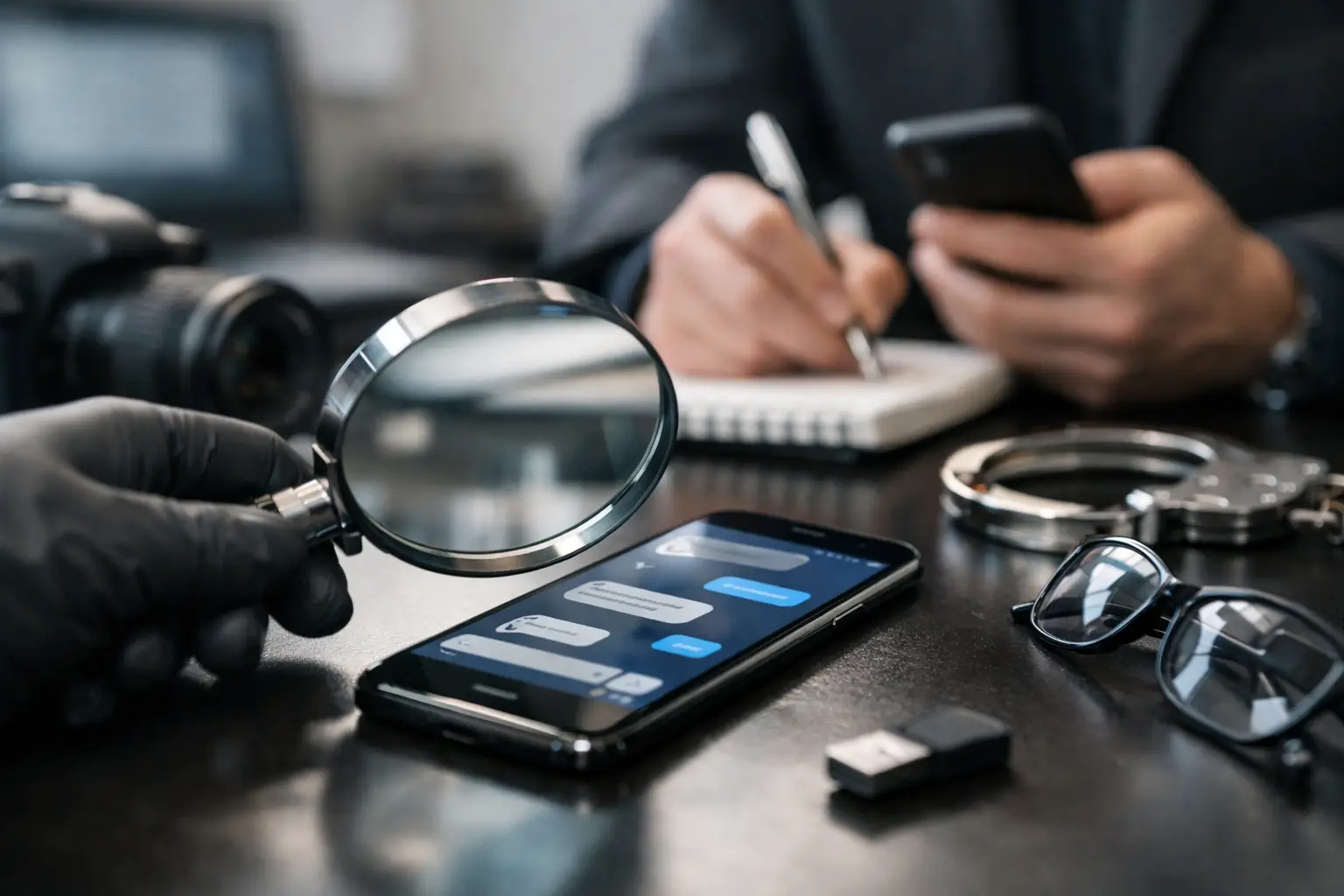
Can Text Messages Be Investigated?
A suspicious text thread can change the direction of a divorce, a custody dispute, a workplace fraud case, or a criminal defense matter in a matter of minutes. When clients ask, can text messages be investigated, the short answer is yes – but the real answer depends on the device, the carrier, the age of the messages, and how the evidence is collected.
That last point matters more than most people realize. A text message is not just a sentence on a screen. It can be digital evidence, and digital evidence only helps if it is obtained lawfully, preserved correctly, and tied to the right person, device, and timeline.
Can Text Messages Be Investigated in Real Cases?
Yes, text messages can be investigated in many types of cases. They are often relevant in infidelity investigations, divorce and custody disputes, harassment claims, employee misconduct matters, fraud cases, and criminal defense work. In some matters, they help establish motive, planning, opportunity, contact between parties, or inconsistencies in someone’s story.
But there is a difference between viewing a message and proving it. A screenshot may show what appears to be a conversation, yet screenshots can be incomplete, edited, or stripped of context. A proper investigation looks beyond the visible text and asks harder questions. Who controlled the phone? Was the message actually sent? Was it deleted? Are there call logs, app data, location records, or other digital traces that support the timeline?
This is where amateur evidence gathering often fails. People forward screenshots, photograph a phone screen, or access an account they were never authorized to enter. That can weaken a case and, in some situations, create legal exposure of its own.
What Investigators Can Actually Find
Text message investigations are rarely limited to one neat folder of perfect evidence. The available information depends on the source.
Messages still stored on a device
If the text messages are still present on the phone, they may be reviewed and documented, assuming the person providing the device has lawful authority to do so. This often includes message content, dates, times, contact names, phone numbers, and attachments such as photos or videos.
In a professional examination, the message thread is not treated in isolation. The surrounding data may matter just as much. Contact records, deleted photos, app activity, backups, and device usage patterns can help confirm whether a conversation is genuine and relevant.
Deleted text messages
Deleted does not always mean gone. In some cases, deleted messages can be recovered from a device, cloud backup, synced account, or forensic image. Recovery depends on several factors, including the phone model, operating system, whether the device has been heavily used since deletion, and whether data has been overwritten.
There are limits. Some deleted content cannot be recovered, and no ethical investigator should promise otherwise. But in the right case, a forensic review may identify remnants of messages, timestamps, contact references, or related data that still has evidentiary value.
Carrier records
Many people assume the phone carrier stores every text message word for word. Usually, that is not the case. Carriers often retain limited records, such as the date and time a message was sent, the sending and receiving numbers, and sometimes transmission details. Message content is often unavailable or retained only briefly, if at all.
That said, even non-content records can be useful. They may confirm communication between two people at key times, support or challenge an alibi, or show patterns of contact that matter in a legal dispute.
Third-party messaging apps
Not every “text” is technically an SMS message. Many conversations now happen through iMessage, WhatsApp, Signal, Telegram, Facebook Messenger, or other apps. Each platform handles storage, encryption, backups, and retention differently.
That means the answer to can text messages be investigated may change depending on the platform involved. Some apps leave recoverable traces on a device. Others are designed to minimize retention. Some messages may exist in cloud backups. Others may disappear quickly and permanently.
The Legal Side Matters as Much as the Technical Side
The biggest mistake people make is assuming that if they can access a phone, they can legally search it. That is not always true.
Ownership of the device does not automatically equal legal authority to review all of its contents. Shared phones, family plans, employer-issued devices, marital property, and jointly used accounts can create confusion, but confusion is not a defense. Privacy laws, wiretap laws, and computer access laws can come into play quickly.
For example, secretly accessing a spouse’s protected account, installing spyware, guessing a password, or intercepting live communications can expose someone to serious legal consequences. Evidence gathered improperly may also be challenged, excluded, or turned against the person who collected it.
A licensed investigator with digital forensics experience does not just ask what is possible. The first question is what is lawful. That protects the client, the case, and the value of the evidence.
When Text Message Evidence Is Strong – And When It Is Weak
Text messages can be powerful evidence, but they are not automatically decisive.
Stronger text message evidence
Text evidence tends to be stronger when the source is verified, the full thread is available, timestamps are intact, the device or account can be tied to a specific person, and there is corroborating evidence. Corroboration might include surveillance, witness statements, phone records, location data, financial records, or social media activity.
A message saying “I’m here” means very little by itself. That same message becomes more useful if it aligns with geolocation data, a parking receipt, surveillance footage, and a confirmed meeting between parties.
Weaker text message evidence
Text evidence is weaker when it comes only from screenshots, when the conversation is partial, when names in the phone are unverified, or when there is no proof of who actually used the device. Phones are shared. Contacts are mislabeled. Messages can be deleted selectively. Context can be hidden.
This is why experienced investigators do not overstate what a single screenshot proves. Good cases are built through verification, not assumption.
How a Professional Investigation Approaches Text Messages
A proper investigation starts with the objective. Are you trying to prove contact between two people? Establish a timeline? Recover deleted communications? Support a custody argument? Defend against a false allegation? The strategy changes based on the purpose.
From there, the evidence source is assessed. That might involve reviewing a client’s lawfully provided device, documenting existing message threads, preserving metadata, identifying related digital evidence, and coordinating with counsel when subpoenas or court orders are needed.
In higher-stakes matters, chain of custody becomes essential. If evidence may be used in court, the handling process must be documented carefully. Who had the device, when it was examined, how the data was preserved, and what methods were used can all become important later.
That is one reason firms such as Kay & Associates approach digital evidence conservatively and strategically. In sensitive personal and legal matters, the goal is not just to find information. It is to develop evidence that can withstand scrutiny.
Common Situations Where Clients Ask if Text Messages Can Be Investigated
In infidelity matters, clients often want to know whether deleted conversations with a third party can be recovered or whether communication patterns can be verified without relying on guesswork. In divorce and custody disputes, the question is often whether messages show threats, neglect, coaching of a child, substance abuse, or attempts to hide assets or relationships.
In business cases, text messages may reveal employee collusion, theft of clients, misuse of company property, or coordination in fraud. In criminal defense matters, text records can sometimes challenge a timeline, support an alternative explanation, or show that a key claim does not hold up under review.
Each of these cases turns on details. The age of the messages, the device involved, the app used, and the legal pathway for obtaining records can change the answer significantly.
What You Should Do if Text Messages May Matter
Do not alter the phone. Do not delete anything. Do not install monitoring software. Do not try to “test” passcodes or break into accounts you are not clearly authorized to access.
Instead, preserve what you have. Keep the device charged, avoid unnecessary use, save relevant screenshots only as a temporary reference, and write down what you know about dates, names, numbers, and incidents while your memory is fresh. If there is a court case or expected litigation, speak with your attorney quickly and involve a licensed investigator who understands digital evidence.
That early decision can make a major difference. Some records disappear fast. Some opportunities to preserve data are lost once a phone is reset, replaced, or updated.
Text messages can reveal the truth, but only when the truth is handled with care. If you believe critical answers may exist on a phone or in message records, the safest next step is not to act on impulse. It is to protect the evidence before it protects or harms your case.










Locating and Serving a Person Hard to Find for Legal Action says: