


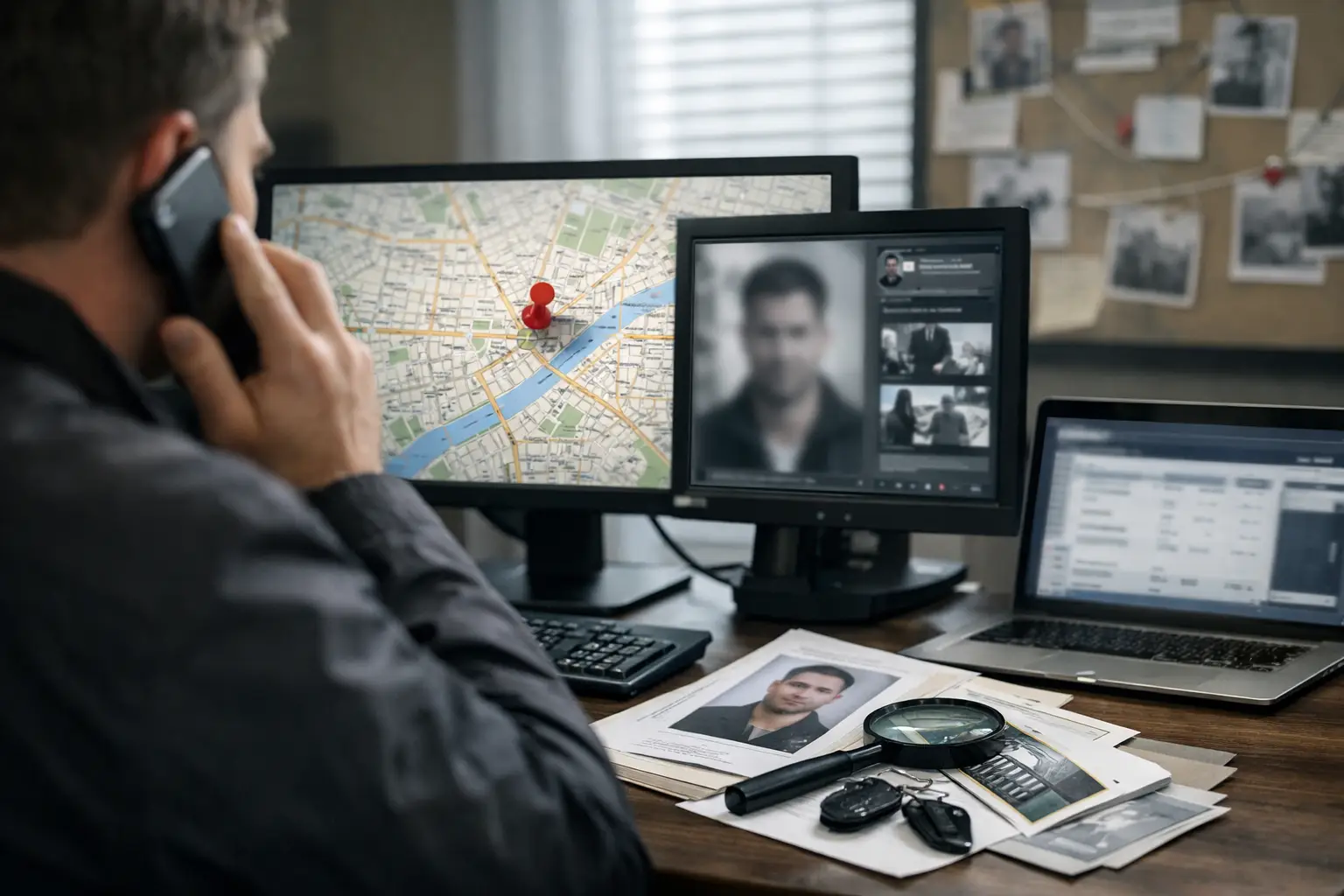
What Does a Skip Tracer Do for Your Case?
A person disappears from an address, stops returning calls, changes jobs, or leaves behind unpaid obligations. The question quickly becomes: what does a skip tracer do when ordinary searches lead nowhere? A professional skip tracer develops verified leads to locate people, assets, and relevant connections while working within legal and ethical boundaries.
For a family facing a missing-person concern, an attorney preparing for litigation, or a business trying to recover a debt, the goal is not simply finding a name in a database. The goal is reliable intelligence that can support a safe decision, a legal strategy, or the next appropriate step. That distinction matters, especially when emotions, money, custody, or personal safety are involved.
What Does a Skip Tracer Do?
A skip tracer locates individuals who have moved, become difficult to contact, or deliberately avoided being found. The term comes from “skipping,” an old expression for leaving town or abandoning an obligation. While skip tracing is often associated with debt collection, professional investigators use these techniques in many lawful matters, including missing persons cases, family law disputes, witness location, asset investigations, and fraud inquiries.
The work begins by reviewing what is already known. That may include a full name, date of birth, prior addresses, phone numbers, former employers, known relatives, social media activity, business affiliations, vehicle information, or court records. Even small details can help establish a pattern, but professional investigators do not treat every data point as fact. Information must be evaluated, compared, and verified.
A skilled skip tracer then follows a structured investigative path. They may identify address history, examine public and permissible proprietary records, trace possible employment or business connections, review litigation filings, and assess digital footprints. When appropriate, they may conduct discreet field inquiries or surveillance to confirm whether a person is actually connected to a location.
The result should be more than a possible address. It should be a defensible assessment of where a person may be, how current the information is, and what evidence supports that conclusion.
Skip Tracing Is Not Just an Online Search
Search engines and social media can produce a surprising amount of information, but they also produce outdated profiles, mistaken identities, and incomplete results. A person may have an old account that remains online for years after they have moved. A phone number may be reassigned. A public record may identify several people with the same name.
Professional skip tracing requires analysis. Investigators compare dates, locations, relationships, aliases, and other identifiers to reduce the risk of pursuing the wrong individual. This is particularly important in Los Angeles and other large metropolitan areas, where common names, frequent moves, and complex personal or business networks can create false leads.
A licensed investigator also understands when not to act on a lead. An unconfirmed address is not proof of residence. A social media post is not proof of current location. A relative’s name in a record does not establish that the relative has useful or accurate information. Responsible case handling means separating possibilities from verified findings.
Common Reasons Clients Need a Skip Tracer
Skip tracing is useful when a person has become hard to locate and the reason for locating them is legitimate. In private matters, a client may be trying to find a missing family member, reconnect with an estranged relative, or obtain information relevant to a divorce or child custody matter. In these situations, discretion is essential. The investigator must consider the client’s objective as well as the possibility of safety concerns, domestic violence history, protective orders, or other sensitive circumstances.
Law firms may need to locate witnesses, parties to a lawsuit, heirs, former employees, or individuals who must be served with legal documents. A strong location investigation can save time and prevent legal teams from relying on stale contact information. It can also help counsel determine whether further legal process is worthwhile.
Businesses, lenders, and insurers may use skip tracing as part of an asset search, collections strategy, fraud investigation, or due diligence effort. A person who disappears after a financial dispute may still have identifiable business interests, property ties, or other lawful points of connection. However, finding a person does not automatically create a right to contact them in any manner or to take action against their assets. Legal counsel and applicable regulations guide what happens next.
The Difference Between a Skip Tracer and a Private Investigator
Some skip tracers work in narrow roles focused primarily on record research and contact location. A licensed private investigator can bring a broader investigative framework to a complex case. That may include surveillance, background research, social media investigations, witness interviews, asset location, digital evidence review, and documented reporting.
It depends on the matter. If a company needs a basic address update, a limited tracing service may be sufficient. If the case involves suspected fraud, a custody dispute, a missing person, a difficult service of process issue, or a person who may be actively concealing their location, a licensed investigative firm is often the safer choice.
The advantage is not simply access to information. It is the ability to assess that information in context and develop a case-specific strategy. An investigator can recognize when a lead points toward a legitimate residence, when it suggests an alias or business connection, and when field verification is necessary before a client relies on the result.
How Professional Skip Tracing Protects Your Case
The way information is obtained can matter as much as the information itself. Investigators must comply with privacy laws, licensing requirements, consumer protection rules, anti-harassment laws, and restrictions on accessing protected information. They cannot lawfully impersonate law enforcement, hack accounts, trespass, threaten someone, or use deception that violates the law.
Clients should be cautious of anyone who promises to find any person immediately, guarantees a specific result, or offers access to bank records, text messages, protected medical records, or other private information without lawful authority. Those claims can expose a client to risk and may indicate illegal methods.
A professional investigator establishes the purpose of the search before beginning work. Why does the client need to locate this person? Is there a court matter, a financial dispute, a welfare concern, or a legitimate business reason? Are there restraining orders, safety concerns, or legal limits that should shape the investigation? These questions are not obstacles. They protect the client, the subject, and the integrity of the case.
Documentation is also critical. In legal or business matters, a verbal statement that someone was “found” may not be enough. A clear investigative report can explain the steps taken, the records reviewed, the basis for a conclusion, and any limitations that remain. If an attorney, insurer, court, or corporate decision-maker later reviews the matter, organized documentation strengthens the value of the work.
What Information Helps a Skip Tracer Start
Clients do not need to solve the case before contacting an investigator. Still, accurate starting information can improve efficiency and reduce time spent sorting through unrelated leads. Useful information may include full legal names and known aliases, dates of birth, prior addresses, old phone numbers, email addresses, photographs, vehicle details, employment history, names of relatives or associates, and any known timeline of the person’s last contact.
It is equally helpful to share the context. If the individual left after a custody exchange, a financial disagreement, an accident, or a suspected fraud event, that background may help an investigator identify relevant records and evaluate risk. Clients should provide information honestly, including facts that may complicate the situation. A complete picture supports a better strategy.
At Kay & Associates Investigations, skip tracing is approached as a confidential investigative assignment, not a one-size-fits-all database search. Cases are assessed individually, with attention to the client’s purpose, legal sensitivities, and the level of verification needed before acting on a lead.
When a Location Is Found, the Work May Not Be Over
Locating someone is often the beginning of the next decision. A family may need to consider whether a welfare check through the proper authorities is appropriate. An attorney may need to arrange lawful service. A business may need counsel before making contact or pursuing collection. In a high-conflict personal matter, direct contact may be unwise or unsafe.
That is why a professional investigator should not pressure a client into immediate action based on raw information. The right next step depends on the case, the legal authority available, and the risks involved. Verified information gives clients choices. It does not remove the need for sound judgment.
When someone matters to your family, your legal case, or your business, uncertainty can become expensive and emotionally exhausting. A lawful, discreet investigation can replace assumptions with credible facts and give you a clearer path forward.










Locating and Serving a Person Hard to Find for Legal Action says: