


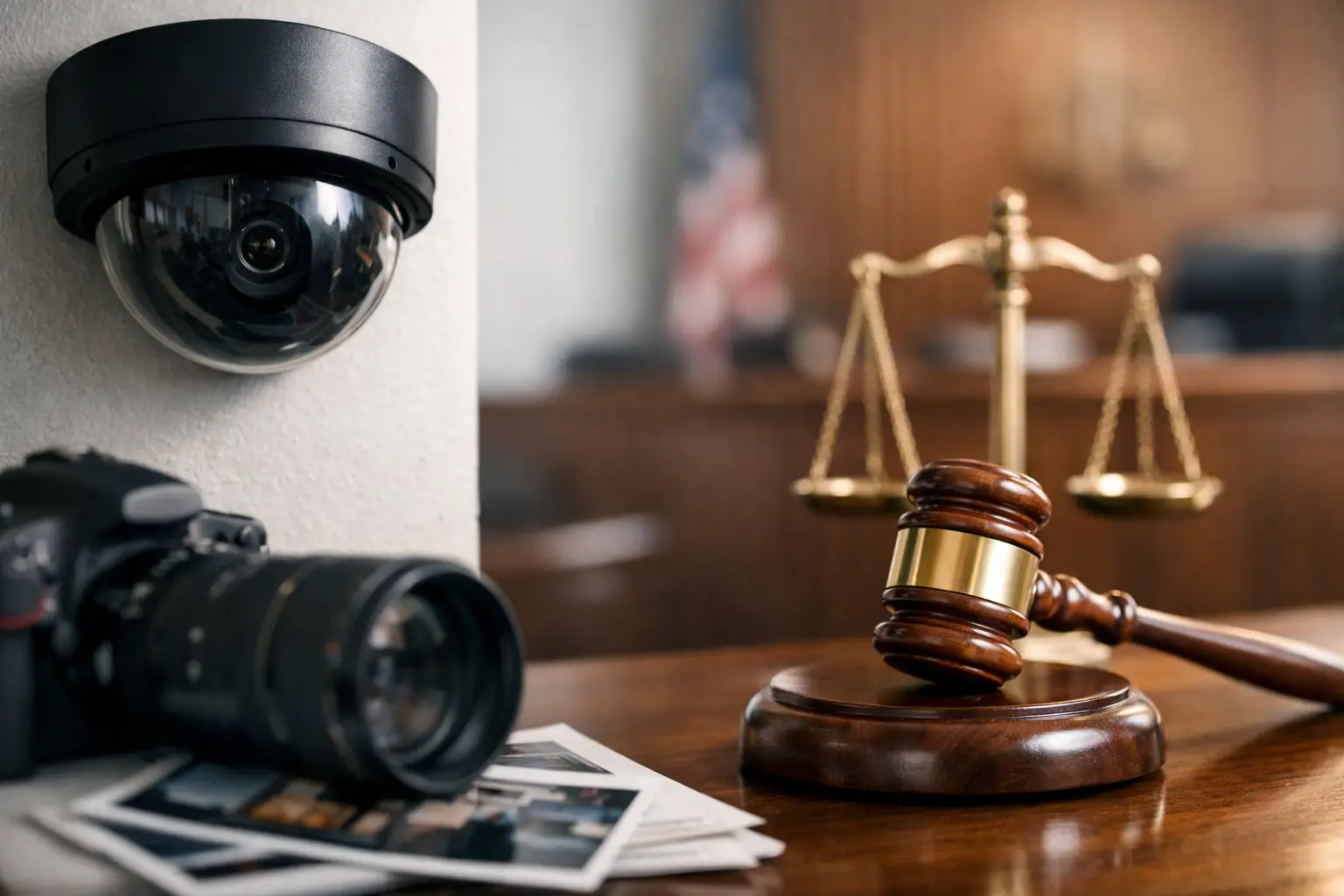
Is Surveillance Evidence Court Admissible?
A clear video can change the direction of a divorce, custody, fraud, or injury case. But the question is not simply whether footage exists. Is surveillance evidence court admissible? Often, yes – but only when it was obtained lawfully, is relevant to the dispute, and can be properly verified.
For clients facing a legal matter in California, that distinction is critical. Evidence gathered carelessly can create privacy concerns, damage credibility, or leave an attorney with material that cannot be used effectively. Professional surveillance is designed not merely to observe conduct, but to document it in a manner that can withstand scrutiny.
Is Surveillance Evidence Court Admissible in California?
Surveillance evidence may be admissible in California courts when it meets the same basic standards applied to other evidence. The party offering the footage, photographs, reports, or related records must generally show that the material is relevant, authentic, and obtained without violating the law.
Admissibility is ultimately decided by the judge, not by the investigator, client, or attorney. A video may be highly persuasive and still face objections if its origin is unclear, if it was edited without explanation, or if its collection violated privacy or recording laws.
In practical terms, professionally gathered surveillance has a stronger foundation when the investigator can explain where they were positioned, what they personally observed, when the recording was made, what equipment was used, and how the original files were preserved. That documentation gives counsel a credible basis for presenting the evidence.
What Courts Look for Before Allowing Surveillance
Relevance to the actual dispute
The evidence must help prove or disprove a material issue in the case. In a child custody matter, surveillance might document whether a parent is following a court-ordered visitation schedule, transporting a child safely, or engaging in conduct that directly affects the child’s welfare.
In a personal injury claim, it may show activity inconsistent with allegations about physical limitations. In a business or fraud investigation, it may document unauthorized transfers of property, meetings with competitors, or misuse of company assets. Footage that is merely embarrassing or inflammatory, without a meaningful connection to the legal issue, may be excluded or given little weight.
Authentication and reliability
A court needs confidence that a recording is what its proponent says it is. This is called authentication. A witness with personal knowledge may identify the person, location, date, or events depicted. A licensed investigator may also testify about how the surveillance was conducted and how the footage was maintained.
Original files matter. Metadata, time and date settings, contemporaneous field notes, detailed reports, and a clear chain of custody can all support authenticity. If footage has been cropped, enhanced, or compiled into a shorter presentation, the original should still be retained. Editing is not automatically improper, but unexplained edits invite challenges.
Lawful collection
Evidence does not become acceptable simply because it is useful. Investigators and clients must follow applicable privacy, trespass, recording, and data-access laws. Surveillance conducted from public places is often permissible because people generally have a reduced expectation of privacy in what they openly do in public view.
The analysis changes significantly when someone enters private property, peers into an area where privacy is reasonably expected, places a tracking device without proper authority, accesses protected accounts, or records private conversations. California has particularly strict rules concerning confidential communications. Recording audio without the required consent can create serious legal exposure and may jeopardize the evidence.
Fairness and potential prejudice
Even relevant evidence can be limited if it is misleading, confusing, cumulative, or unfairly prejudicial. A short video clip may not show the full context of an event. For example, footage of a parent having a drink at dinner does not, by itself, establish impaired parenting. A few minutes of physical activity may not disprove a documented medical condition.
Experienced investigators document the facts rather than drawing unsupported conclusions. That restraint protects the value of the evidence and allows the court to evaluate it fairly.
Public Surveillance Versus Private Conduct
One of the most common misunderstandings is that anything visible through a camera is fair game. It is not.
Surveillance from a lawful public location may capture a subject entering a store, meeting another person at a restaurant, loading items into a vehicle, or participating in an activity visible to the public. The subject’s expectation of privacy is usually lower in these settings.
By contrast, recording inside a private residence, over a fence into a secluded yard, in a hotel room, bathroom, changing area, or other private space can raise substantial legal and ethical issues. The same caution applies to audio. Video without sound and audio recording are not treated the same way, especially under California law.
A licensed investigator should assess the location, purpose, and method before surveillance begins. That planning is not a formality. It helps ensure the resulting work supports the client’s legal objectives rather than creating a new problem.
Why Professional Documentation Matters
A courtroom does not see surveillance the way a client sees it. A client may recognize a spouse, employee, or former business partner immediately. A judge or jury needs an organized, verifiable presentation.
Professional surveillance typically includes time-stamped imagery, field observations, a written report, identification of relevant locations, and secure preservation of original media. When appropriate, the investigator may be available to explain the process under oath. The result is more than a collection of images. It is evidence supported by a documented investigative method.
This is especially important when the opposing side claims that footage was staged, misdated, selectively edited, or taken from an improper location. A clear chain of custody and complete report help answer those objections.
Surveillance in Divorce and Child Custody Cases
Family law cases carry emotional weight, which can tempt people to gather evidence themselves. Secretly placing a recorder, logging into a spouse’s account, installing monitoring software, or following someone in a confrontational manner can expose a party to legal consequences and complicate an already difficult case.
Lawful surveillance can still be valuable when it addresses a legitimate issue. It may document cohabitation relevant to support questions, undisclosed assets or work activity, violations of custody orders, unsafe driving with a child, or conduct that bears directly on a child’s well-being.
The key is proportionality. Courts are more likely to take seriously evidence that addresses a concrete concern than material gathered to shame or retaliate. A tailored plan also avoids unnecessary surveillance, expense, and intrusion.
Surveillance in Fraud, Injury, and Corporate Matters
Businesses, insurers, banks, and attorneys may use surveillance to investigate suspected theft, workers’ compensation fraud, insurance claims, asset concealment, or breaches of fiduciary duty. These cases often demand particularly careful documentation because the evidence may involve multiple locations, employees, vendors, and digital records.
Physical surveillance can establish patterns, but it is rarely the complete answer. It may need to be evaluated alongside public records, financial documentation, witness interviews, social media material that is lawfully available, or digital forensic findings. A focused investigation prevents clients from relying too heavily on a single clip or observation.
Steps That Protect the Value of Evidence
If surveillance may become part of a legal matter, preserve it immediately. Keep the original files, avoid altering timestamps or adding music and captions, and do not circulate sensitive footage casually. Wide sharing can create confidentiality concerns and give the other side opportunities to question whether the material was changed or taken out of context.
It is also wise to involve legal counsel early when litigation is pending or likely. An attorney can determine what facts matter under the claims at issue and whether a proposed investigative method is appropriate. A licensed private investigator can then conduct lawful, targeted fieldwork that aligns with that legal strategy.
For more than three decades, Kay & Associates Investigations has approached sensitive surveillance assignments with this standard in mind: obtain verified facts discreetly, preserve them carefully, and never lose sight of the client’s legal and personal exposure.
The Strongest Evidence Begins With a Lawful Plan
Surveillance can be compelling evidence, but its value depends on how it was obtained, documented, and presented. A camera captures only part of the story. Professional judgment determines whether that record can credibly support the larger case.
When the stakes involve family, reputation, finances, or a pending lawsuit, the right first step is not to collect more footage at any cost. It is to develop a lawful, focused investigative plan that protects both the evidence and the person relying on it.








Locating and Serving a Person Hard to Find for Legal Action says: