


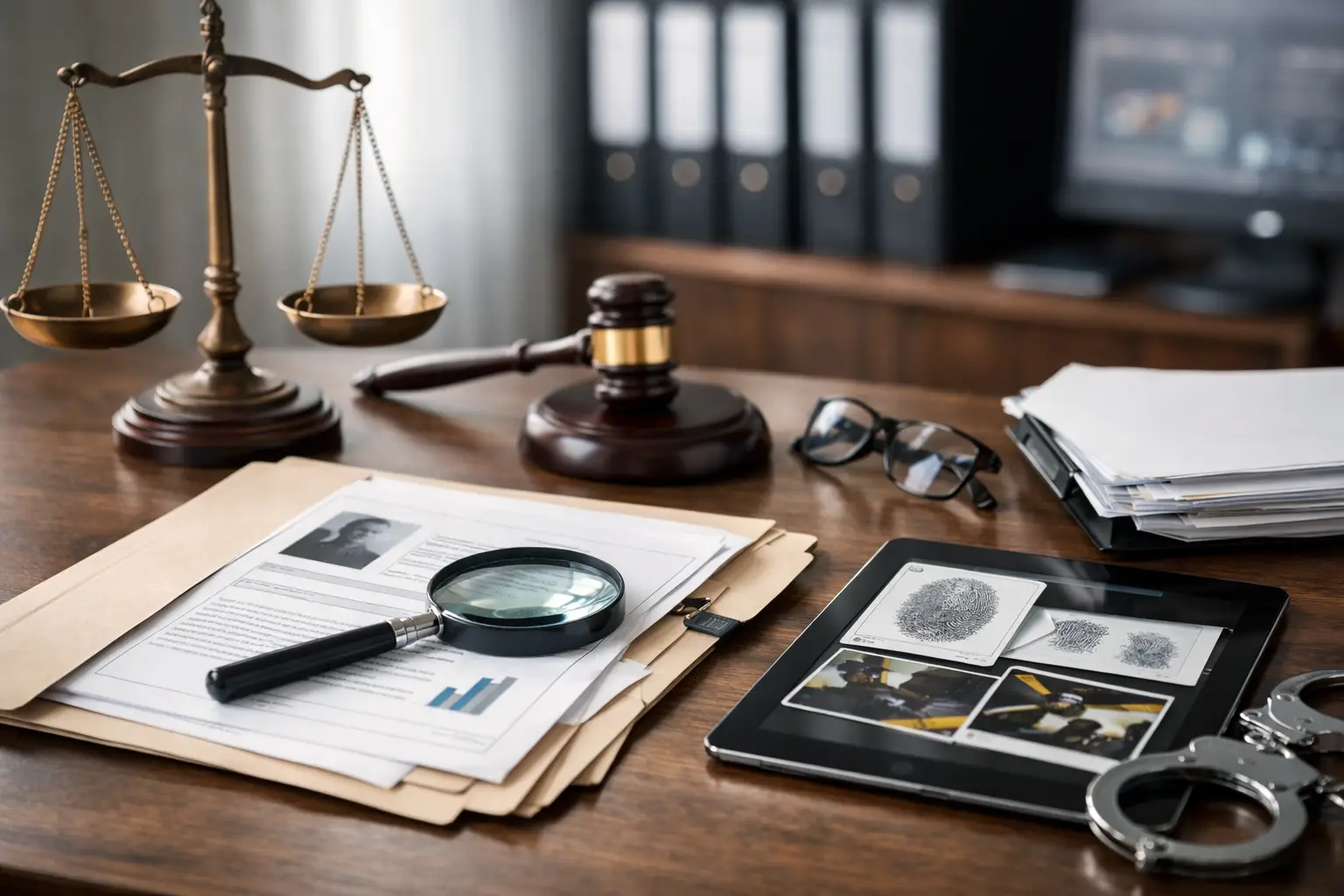
A Practical Guide to Litigation Support Evidence
A case can turn on a text message, a surveillance observation, a financial record, or the absence of a document that should exist. But evidence only helps when it is obtained lawfully, preserved carefully, and supported by a clear account of where it came from. This guide to litigation support evidence explains what makes investigative material useful to counsel and defensible when a dispute reaches court.
For individuals facing divorce, custody, fraud, or asset-related disputes, and for attorneys and businesses managing complex claims, the goal is not simply to collect information. The goal is to develop verified facts that can withstand scrutiny from opposing counsel, a judge, insurer, regulator, or internal decision-maker.
What Litigation Support Evidence Actually Means
Litigation support evidence is information gathered, organized, and documented to assist a legal matter. It may help an attorney assess a claim before filing, support discovery, identify witnesses, challenge a competing narrative, locate assets, or prepare for deposition and trial.
The category is broad. In a family law matter, it may include documented observations relevant to parenting conduct, undisclosed cohabitation, or violations of a court order. In a corporate dispute, it may involve transaction records, employee activity, digital communications, background intelligence, or evidence of financial misconduct. In a personal injury or defense matter, it may include scene documentation, witness interviews, timelines, and lawful surveillance.
Not every fact collected during an investigation will be admissible evidence. Admissibility is a legal question for counsel and the court. Still, professionally collected investigative material can give counsel a stronger factual foundation and a clearer path for obtaining, authenticating, or presenting evidence through the proper legal process.
The Difference Between Information and Evidence
Clients often arrive with information: a suspicion, an anonymous tip, screenshots sent by a friend, a confusing bank statement, or an account of what someone said. That information may be valuable, but it requires verification.
Evidence has context. A credible investigative file identifies what was observed or obtained, when it occurred, who handled it, and how the investigator reached the conclusion. It separates direct facts from assumptions. It also preserves the original source whenever possible rather than relying on a cropped image, a rewritten account, or a conclusion without supporting detail.
For example, a screenshot of a social media post may suggest a person was in a certain location. A properly documented social media investigation may record the public-facing account, date and time of capture, relevant content, associated identifiers, and the method used to preserve it. The second approach gives counsel far more to work with if authenticity becomes contested.
Start With a Legal and Investigative Strategy
The best time to consider evidence is before a client begins collecting it independently. Well-intentioned actions can create risk. Accessing another person’s private account without authorization, recording conversations where consent requirements are not met, placing a tracking device on property you do not have the right to track, or impersonating someone online can create legal consequences and damage a case.
A sound strategy begins with the legal issue. What fact must be established, contradicted, or clarified? Who has firsthand knowledge? What records may exist? Is there a deadline, a risk of records being destroyed, or a concern for personal safety?
Counsel may identify the elements that matter legally, while a licensed investigator develops a field strategy designed to obtain lawful, relevant facts. This coordination prevents wasted effort. It also helps keep the investigation focused on conduct that actually matters to the case rather than emotionally compelling details with little legal value.
Define the Questions Before Collecting Material
A litigation support assignment should have specific questions. In an asset investigation, the question may be whether a party has undisclosed business interests, real property, vehicles, or income-producing assets. In a child custody matter, it may concern documented conduct affecting a child’s welfare during particular parenting periods.
Specific questions create measurable investigative tasks. They also reduce the chance that a file becomes overloaded with irrelevant material. A concise, well-supported report is usually more useful than a large collection of loosely connected records.
Core Types of Evidence Used in Litigation Support
The facts required depend on the case, but several categories appear frequently in civil, family, employment, insurance, and business matters.
Documentary evidence can include public records, corporate filings, property records, court records, transaction documents, policies, correspondence, invoices, and other materials that establish a timeline or relationship. The source matters. A record from an official custodian may carry different weight than an unofficial copy with no clear origin.
Digital evidence may include publicly available social media content, websites, photographs, videos, emails provided voluntarily or through lawful process, device data, and metadata. Digital material is especially vulnerable to alteration, deletion, and disputes over authorship. Preservation should occur promptly and with enough detail to explain the source and capture process.
Witness evidence includes interviews with people who have firsthand knowledge. A useful witness statement distinguishes what the person personally saw, heard, did, or received from what they merely believe or were told. Investigators should avoid leading a witness toward a preferred answer. Neutral interviews are more credible and more valuable to counsel.
Physical and observational evidence may include photographs, video, scene observations, measurements, surveillance logs, and documented activity. Surveillance is not about producing dramatic footage. It is about accurate observation, lawful conduct, and reports that place each observation in time and context.
Chain of Custody and Documentation Matter
Chain of custody is the documented history of an item from collection through storage and transfer. It is particularly significant for physical items, digital devices, recordings, and files that may be challenged as altered, substituted, or mishandled.
A strong chain of custody records the date, time, location, collector, description of the item, method of preservation, and every transfer of control. For digital material, preservation may also involve maintaining original files, recording file properties, creating verified copies, and limiting unnecessary handling.
Documentation should be routine, not reconstructed after the fact. An investigator’s contemporaneous notes, dated surveillance logs, original images, interview records, and source documentation allow counsel to understand how the case developed. They also help refresh recollection if testimony occurs months or years later.
This does not mean every matter requires a forensic laboratory process. The appropriate level of preservation depends on the evidence, the stakes, the anticipated challenge, and the instructions of counsel. A disputed electronic record in high-value litigation requires more rigor than a preliminary background inquiry. The principle remains the same: preserve what matters before it disappears or changes.
Lawful Collection Protects the Case and the Client
Evidence that appears useful can become a liability if it was acquired improperly. Privacy laws, recording laws, workplace policies, court orders, data-access restrictions, and state and federal regulations can all affect what may be collected and how.
California is particularly sensitive to privacy issues, including confidential communications. Clients should not assume that shared access, a personal relationship, or a suspicion of wrongdoing gives them permission to enter accounts, record private conversations, or retrieve data from a device. When there is doubt, counsel should be consulted before action is taken.
Licensed investigators understand the difference between open-source research, lawful observation, consensual access, and conduct that crosses a legal line. Professional discipline is not a limitation on results. It is what protects the client from unnecessary exposure and preserves the credibility of the work product.
How an Investigator Supports Counsel
A litigation support investigator does more than gather facts. The investigator can build timelines, locate and interview witnesses, identify missing records, conduct lawful surveillance, document scenes, analyze public information, assist with service-related location work, and organize findings into reports counsel can evaluate efficiently.
The report should be factual, readable, and free of exaggeration. It should identify dates, times, locations, sources, and observations without turning speculation into certainty. If a fact cannot be verified, that should be stated clearly. Credibility often comes from acknowledging the limits of an investigation, not from overstating its results.
Investigators may also help attorneys prepare for testimony by organizing exhibits, confirming witness availability, reviewing timelines, and identifying factual inconsistencies that warrant follow-up. They should not provide legal conclusions or substitute for counsel’s judgment. Their role is to deliver reliable intelligence and defensible documentation.
Practical Steps When You Expect Litigation
If you believe a dispute may lead to litigation, preserve relevant communications and records in their original form. Do not alter, delete, rename, crop, or selectively edit material. Make a written timeline while dates and details are fresh, and keep relevant documents in a secure location.
Avoid confronting the other party based on unverified information. Confrontation can lead to evidence being deleted, assets being moved, witnesses being influenced, or a situation becoming unsafe. It may also alert a person to an investigation before the facts are properly documented.
Speak with an attorney when legal action is anticipated, then consider whether a licensed investigator can address the unanswered factual questions. At Kay & Associates Investigations, assignments are tailored to the legal, personal, and operational realities of the matter, with discretion maintained from the first consultation through final reporting.
When the facts matter, careful evidence work gives clients something more valuable than suspicion: a documented basis for making the next decision with clarity.










Locating and Serving a Person Hard to Find for Legal Action says: