


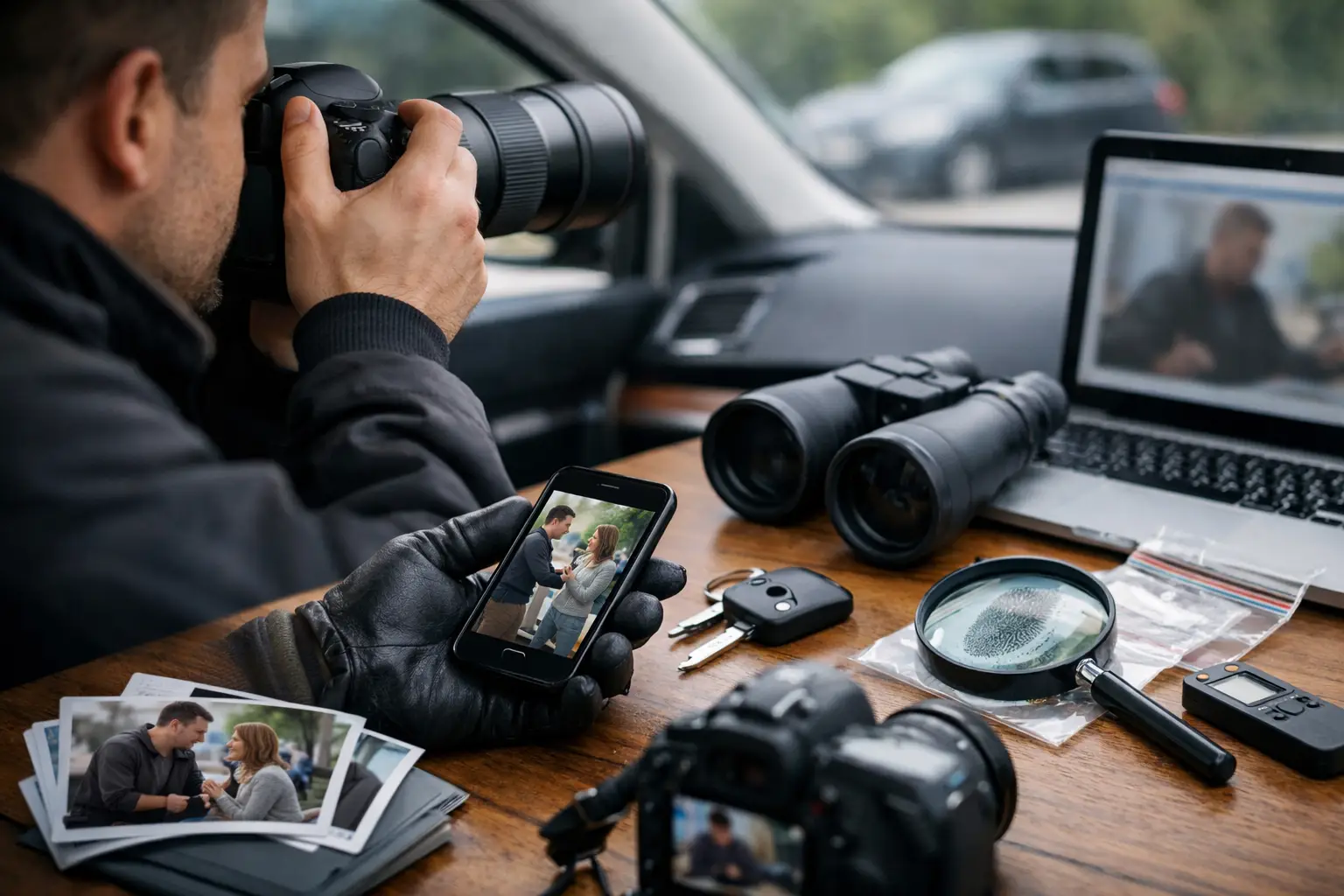
How Private Investigators Gather Evidence
When someone comes to an investigator, they are usually past the point of guesswork. A spouse’s story does not add up. A custody dispute is turning into a fight over facts. A business sees money moving in the wrong direction but cannot yet prove why. In cases like these, how private investigators gather evidence matters because the difference between suspicion and proof is what allows a client, attorney, or company to act with confidence.
Private investigation is not about shortcuts, intimidation, or television-style tricks. It is a disciplined process built on lawful collection, careful documentation, and strategy tailored to the case. The strongest evidence is not just persuasive. It is credible, relevant, and obtained in a way that can withstand scrutiny.
How Private Investigators Gather Evidence in Real Cases
A licensed private investigator starts by identifying what must be proven, what can legally be collected, and what method fits the situation. That sounds simple, but it is where many amateur efforts fail. Following the wrong person too aggressively, confronting a subject too early, or relying on rumors can damage a case before it begins.
Professional investigators work backward from the client’s objective. In an infidelity case, the goal may be to confirm patterns of conduct and document meetings, locations, and timelines. In a fraud matter, the objective may be to trace transactions, identify hidden relationships, or establish whether an employee is violating company policy. In a legal matter, the question is often whether the evidence will support litigation, negotiation, or a defense strategy.
That is why experienced investigators begin with intake, timeline review, and fact verification. They look for what is known, what is assumed, and what still needs to be established. A small detail like a recurring address, a vehicle description, a social media account, or an unexplained payment can shape the entire investigation.
Surveillance and Visual Documentation
Surveillance remains one of the most effective ways to gather evidence when conduct, movement, or association is central to the case. It is also one of the most misunderstood. Good surveillance is not random watching. It is planned, patient, and tightly documented.
An investigator studies the subject’s habits, likely routes, work schedule, and behavior patterns. The goal is to be in the right place at the right time without drawing attention. That may involve fixed surveillance from a legal vantage point, mobile surveillance by vehicle, or coordinated observation when a case requires more than one investigator.
Photos and video are often part of the evidence package, but context is just as important as the images themselves. A single photograph rarely tells the full story. Dates, times, locations, duration of contact, and observed conduct help establish meaning. If a subject leaves work early, meets the same person repeatedly, enters a residence, and stays overnight, the pattern carries far more weight than one isolated image.
Surveillance has limits, and a reputable investigator will say so. A subject may change routines, use rideshare services, park in restricted areas, or notice unusual attention. Weather, traffic, and legal boundaries all affect results. The point is not to promise drama. It is to document reality accurately.
Interviews, Statements, and Human Intelligence
Evidence does not come only from cameras and databases. People often hold pieces of the truth, whether they realize it or not. Witness interviews can help clarify timelines, identify inconsistencies, and uncover leads that would never appear in a public record search.
A professional investigator knows how to ask questions without contaminating the response. Leading a witness, pressuring someone, or revealing too much too soon can make the information less reliable. Skilled interviewing is measured. It focuses on obtaining usable facts, checking whether statements align with known evidence, and preserving details while memories are still fresh.
In workplace cases, this can mean discreetly speaking with employees or vendors. In family matters, it may involve neighbors, caregivers, or other relevant individuals. In legal support work, witness location and statement development can be essential when a case depends on firsthand observation.
Not every witness is credible, and not every statement is useful. Investigators weigh motive, bias, consistency, and corroboration. That caution is one reason professional evidence carries more value than secondhand accusations.
Records Research and Digital Evidence Collection
Many cases are solved not through confrontation but through records. Public records, court filings, business registrations, property records, and other lawful sources can reveal relationships, ownership, history, and financial patterns. When handled properly, records research turns scattered information into a coherent picture.
For example, a background investigation may show prior litigation, corporate affiliations, bankruptcies, liens, or real property holdings. An asset investigation may identify entities, transfers, or ownership structures that a person hoped would go unnoticed. In a custody or divorce matter, records may support or contradict claims about residence, employment, or conduct.
Digital evidence has become equally important. Social media activity, online marketplace listings, dating profiles, forum posts, and geotagged content can all provide investigative value. The key is lawful capture and preservation. Screenshots without context or verification may not be enough. Investigators document the source, date, account details, and surrounding content to preserve meaning and reduce challenges later.
In more complex matters, digital forensics may be appropriate. That is a specialized process involving the examination of devices, storage media, or digital accounts within legal authority. It can help recover deleted material, trace communications, or identify file activity. This work must be done carefully. Mishandling a device or exceeding legal boundaries can compromise the evidence and create serious problems for the client.
How Private Investigators Gather Evidence Without Breaking the Law
This is where professionalism matters most. A legitimate private investigator does not trespass, hack accounts, impersonate law enforcement, plant recording devices illegally, or obtain protected information through unlawful means. Evidence gathered improperly can be excluded, challenged, or create liability for the person who hired the investigator.
Lawful evidence collection depends on the jurisdiction, the type of case, and the method being used. California, for example, has strict privacy considerations, and what is allowed in one setting may not be allowed in another. Recording laws, expectations of privacy, data access rules, and surveillance boundaries all matter.
A seasoned investigator understands those boundaries and builds the case inside them. That protects the client and strengthens the value of the work. For law firms and corporate clients, this is especially critical. Evidence that cannot survive legal scrutiny is not an asset. It is a risk.
Chain of Custody and Documentation
Gathering evidence is only part of the job. Preserving it properly is what gives it staying power. Investigators maintain detailed notes, logs, timestamps, file organization, and, when needed, chain-of-custody procedures. That means documenting where evidence came from, who handled it, and whether it has been altered or transferred.
This level of documentation becomes important in court matters, internal investigations, and any case where the opposing side may challenge authenticity. A vague claim that “we saw something” is weak. A documented surveillance report supported by time-stamped images, contemporaneous notes, and clear observations is far stronger.
Professional reporting also helps clients make decisions. Good investigative work is not buried in jargon. It is presented in a clear, usable format so a client or attorney can assess what happened and decide what comes next.
Why Strategy Changes From Case to Case
There is no universal playbook for how private investigators gather evidence because the right method depends on the facts. An infidelity investigation often calls for surveillance and digital review. A missing persons case may rely more heavily on records, social media tracing, field work, and contact development. A construction fraud or financial fraud matter may require document analysis, witness interviews, and asset tracing rather than physical surveillance.
Some clients come in wanting one specific tactic because they assume it will produce answers quickly. Sometimes they are right. Often, they are not. The best results usually come from combining methods in the right sequence. Surveillance may identify a key location. Records may tie that location to an associate or company. Interviews may then explain the connection. Each layer makes the next one more precise.
This is also why speed has to be balanced with discipline. Acting quickly can preserve evidence, but rushing without a plan can alert the subject or waste resources. A professional investigator knows when to move fast and when patience is what protects the case.
For clients dealing with personal betrayal, legal pressure, or corporate loss, that discipline matters. The truth is not always dramatic, but it needs to be verified. At Kay & Associates Investigations, that means using lawful methods, experienced judgment, and careful documentation to produce evidence a client can actually use.
If you are considering an investigation, the most useful first step is not trying to prove everything yourself. It is preserving what you already know, avoiding actions that could compromise the matter, and speaking with a licensed investigator who can tell you what can be established, what may take time, and what kind of evidence will hold up when it matters most.










Locating and Serving a Person Hard to Find for Legal Action says: