


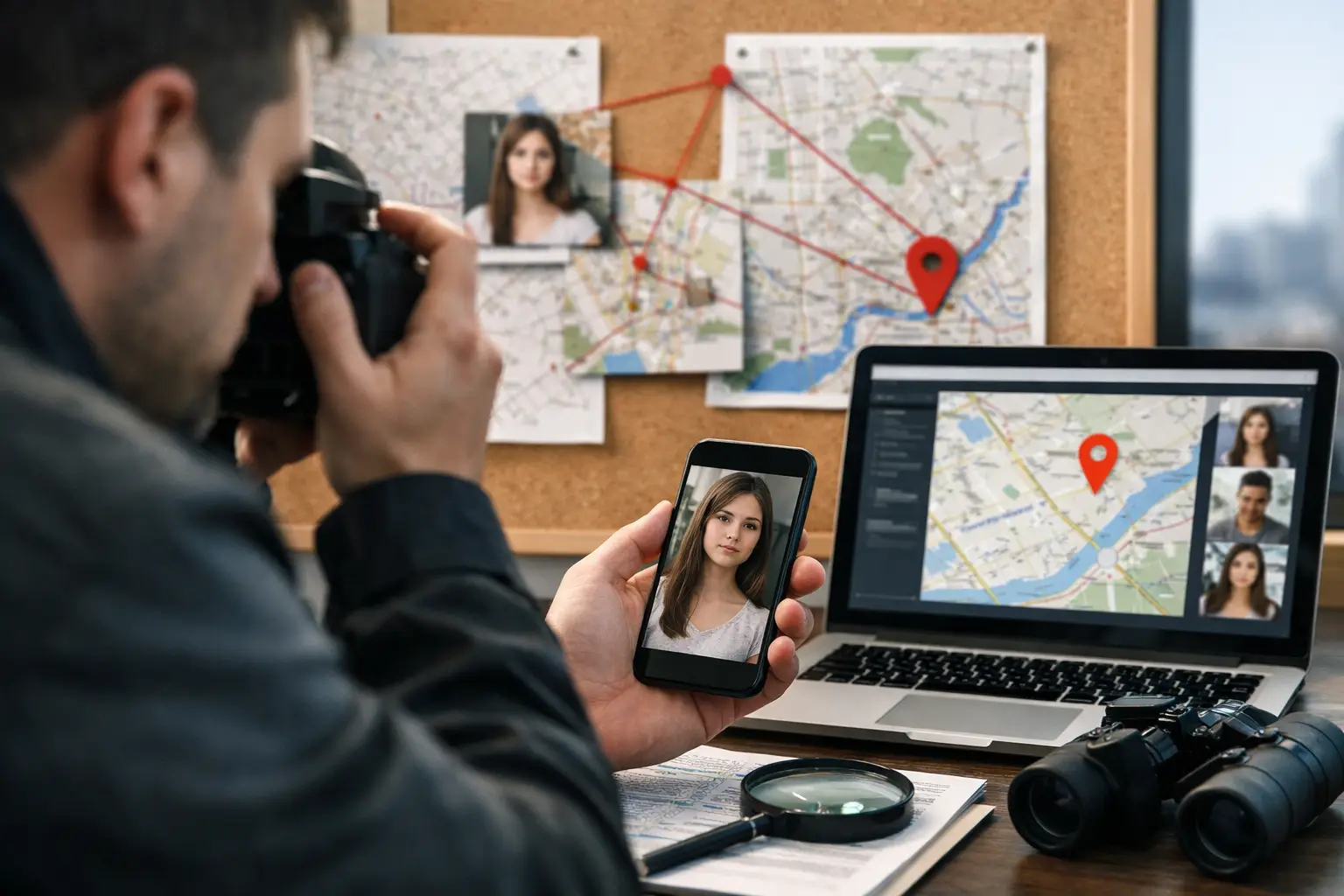
Can Private Investigators Find People?
When someone matters to you and seems to have vanished, the question becomes urgent fast: can private investigators find people when online searches, phone calls, and public records come up short? In many cases, yes. A licensed private investigator can often locate individuals by combining lawful database research, public records analysis, digital tracing, witness interviews, surveillance judgment, and experience that most people simply do not have.
That said, this is not magic, and it is not the same as the way television portrays investigations. Some people are easy to locate. Others have changed names, moved repeatedly, left little paper trail, or are actively avoiding contact. The real answer depends on why the person is missing, how much information is available, and whether the investigator is working within a clear legal objective.
Can private investigators find people in real cases?
Yes, but the better question is how often they can do it responsibly, legally, and with usable results. A professional investigator does not just “look someone up.” The work usually involves verifying identity, separating outdated information from current activity, and building a fact pattern strong enough to avoid false leads.
For example, locating a former spouse for a legal matter is different from locating a biological parent, a witness, a debtor, or an adult child who cut off contact. In one case, the goal may be service of process. In another, it may be confirming welfare, address history, employment, or assets. The strategy changes with the purpose.
This matters because a licensed investigator is not just chasing a name. The investigator is working toward a result that can stand up to scrutiny, protect client confidentiality, and stay within the law.
What private investigators use to locate someone
Most successful locate investigations are built from layers, not a single breakthrough. A skilled investigator starts with identifiers such as full name, date of birth, last known address, phone numbers, relatives, email addresses, usernames, employer history, vehicle information, or prior court involvement. Even small details can become useful when cross-checked properly.
Database and public record research
Licensed investigators typically have access to professional research tools not available to the general public. These tools can help connect addresses, utilities, phone records, property records, business filings, litigation history, and other traceable activity. Public records also play a major role, including voter registrations, civil filings, criminal court records, marriage and divorce records, and property ownership data where legally accessible.
The value is not just access. It is interpretation. People often share common names, and outdated records can point in the wrong direction. Investigators know how to test whether a result is current, whether two records truly belong to the same person, and whether a lead is worth pursuing.
Digital footprint analysis
Many people leave patterns online without realizing it. Social media activity, marketplace listings, forum posts, business profiles, and image metadata can all provide directional clues. A professional investigator reviews that information carefully and lawfully. The goal is not guesswork. It is to identify behavior patterns, locations, associates, and timing that support a legitimate locate effort.
In some cases, the most useful clue is indirect. A person may not post publicly, but a friend, relative, coworker, or former business partner might. That is where experience makes a difference.
Fieldwork and interviews
Not every locate case can be solved from a desk. Sometimes the best lead comes from knocking on the right door, speaking with a former neighbor, confirming whether a vehicle is still associated with an address, or developing information from a verified source. This must be done professionally and carefully. The investigator needs to protect the case, avoid tipping off the subject unnecessarily, and stay within legal and ethical boundaries.
Fieldwork is especially important when records are stale or contradictory. It can also help distinguish between someone who has relocated voluntarily and someone who may be in danger.
What affects whether a person can be found
Some cases move quickly. Others take time. A few reach a dead end, at least temporarily.
The biggest factor is the quality of the starting information. A full legal name and date of birth are far more useful than a nickname and an old city. A recent phone number, employer, photograph, or known associate can shorten the timeline considerably.
The second factor is how much the subject wants to stay hidden. Someone who changed apartments and stopped returning calls is very different from someone deliberately concealing identity, using aliases, avoiding formal employment, or leaving no current digital footprint.
The third factor is time. If the person disappeared twenty years ago and there is limited documentation, the search may require much broader reconstruction. If they were last seen three months ago and still maintain some normal activity, the chances of locating them are usually better.
Jurisdiction matters too. Cross-state and international investigations can be more complex because records, privacy laws, and access vary. A seasoned firm with broad reach is better equipped for that kind of work.
Legal limits matter more than many clients realize
A legitimate investigator does not promise illegal access or guaranteed results. That should reassure you, not discourage you.
Professional investigators must work within state and federal law. They cannot hack into accounts, obtain protected records unlawfully, impersonate law enforcement, or violate privacy statutes to satisfy curiosity. Any firm suggesting otherwise is creating risk for the client as well as for itself.
There is also an important distinction between locating someone and forcing contact. An investigator may be able to verify where a person is, but legal and ethical considerations may limit what can be disclosed or how contact is handled. That is especially true in cases involving adoption, domestic violence concerns, protected parties, or family estrangement.
The right investigator will explain those boundaries clearly. Straight answers are part of professional practice.
When hiring a private investigator makes sense
If your goal has legal, financial, or safety implications, hiring a licensed investigator is often the smarter move than continuing an amateur search. This includes missing persons cases, locating witnesses, serving legal papers, tracing debtors, finding heirs, locating a parent in custody matters, or confirming whether someone is alive and where they are.
It also makes sense when you need documentation rather than rumor. Family members, friends, and online searches can produce noise. A professional investigation is designed to produce verified information.
For clients in emotionally charged situations, there is another advantage: distance. Searching for a missing relative, an ex-spouse, or someone tied to a painful event can lead to mistakes, conflict, or personal risk. A licensed investigator brings objectivity and discretion to a situation that often has very little of either.
What to ask before you hire someone
Not all investigators handle locate cases at the same level. Ask whether the firm is licensed, how long it has been in business, whether it has experience with your specific type of locate matter, and how it handles confidentiality. Ask how results are documented and what legal limitations may affect the case.
Be cautious with anyone who guarantees success, quotes an unrealistically low fee without understanding the facts, or refuses to explain the lawful basis of the work. A credible firm will talk plainly about strategy, risks, timelines, and what can and cannot be done.
That is one reason clients turn to experienced agencies such as Kay & Associates Investigations for sensitive locate matters. Experience does not remove every obstacle, but it does improve judgment, efficiency, and the reliability of the work.
The answer is yes, but not in every case
So, can private investigators find people? Often, yes. Especially when there is a legitimate reason, useful starting information, and a trained investigator who knows how to connect records, behavior, and field intelligence without crossing legal lines.
But the honest answer is still case-specific. Some people are located in days. Some require a longer effort. And some cannot be found immediately because the available trail is too thin or too old. What matters is working with a licensed professional who gives you a realistic assessment and pursues the case with discretion.
If you are trying to locate someone, the best next step is not more guesswork. It is a careful review of the facts you already have. Even details that seem minor can be the piece that turns an uncertain search into a documented answer. When the stakes are personal, legal, or financial, verified information is always more valuable than hope alone.







Locating and Serving a Person Hard to Find for Legal Action says: