



Private Investigator vs Police: Key Differences
When people search for private investigator vs police, they are usually not asking an academic question. They are dealing with a spouse who may be cheating, a child custody dispute that is turning serious, a missing family member, workplace theft, fraud, or a legal case that cannot wait. In those moments, knowing who does what is not just helpful. It can change the outcome.
The short answer is this: police enforce criminal law on behalf of the public, while private investigators work for private clients to gather facts, locate people, document activity, and support legal or personal decision-making. Both can be highly skilled. But they serve different missions, follow different priorities, and respond on very different timelines.
Private investigator vs police: the core difference
Police officers are government agents. Their job is to protect public safety, respond to crimes, investigate violations of law, and make arrests when they have legal authority to do so. They answer to their department, their chain of command, and the broader demands of the community.
A private investigator is hired directly by an individual, attorney, company, insurer, or other client. The investigator’s role is not to arrest anyone or act as a public law enforcement officer. The role is to develop facts legally and discreetly, then provide those findings in a form that can support a client’s next step, whether that means litigation, settlement, internal discipline, risk management, or personal peace of mind.
That difference matters because it shapes everything else – urgency, scope, confidentiality, access, and expectations.
Why people confuse the two
The confusion is understandable. Many licensed private investigators come from law enforcement backgrounds. They may have served in federal, state, or local agencies and bring that training into private practice. On the surface, the work can look similar: interviews, surveillance, background research, evidence review, witness location, and reporting.
But the case goals are often very different. Police are focused on potential criminal enforcement. Private investigators are often focused on proving or disproving a concern for a paying client. A spouse may need evidence for divorce proceedings. A corporation may need to confirm internal fraud. A defense attorney may need a witness found quickly. A parent may need documented behavior relevant to custody. Those matters may never become police cases, but they still require professional investigation.
What police can do that private investigators cannot
Police have powers that private investigators do not. They can make arrests, execute warrants, conduct certain searches with court approval, file criminal charges through the proper legal process, and use the authority of the state in a way no private party can.
That authority is significant, but it is also tied to legal thresholds and departmental priorities. Police do not usually launch a full-scale investigation because someone has a suspicion alone. They need a report, articulable facts, legal basis, available resources, and often a criminal angle that justifies action.
A private investigator cannot step into that role. No legitimate investigator should claim police powers, promise arrests, or suggest they can ignore privacy laws. Licensed professionals know the limits, and good firms protect clients by staying firmly within them.
What private investigators can do that police often will not
This is where the comparison becomes practical.
Police are not set up to handle every private concern in depth. If your spouse is behaving suspiciously, your business partner may be diverting assets, or your teenager is being influenced by someone dangerous online, you may not get the kind of sustained attention you need from a police department, especially if no clear crime has been established.
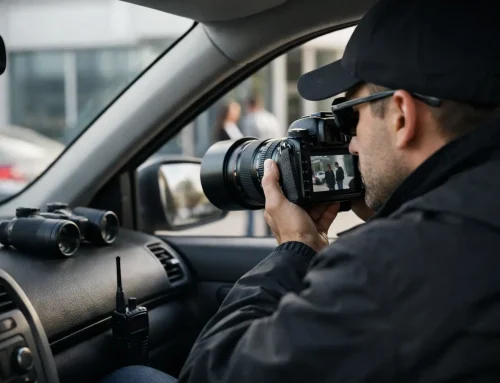
A private investigator can devote focused time to the issue. That may include surveillance, background development, social media investigation, asset research, neighborhood canvassing, witness interviews, records-based intelligence, digital forensic review, or timeline reconstruction. The work is tailored to the client’s objective, not a general public caseload.
That flexibility is one of the biggest advantages of hiring a private investigator. The case strategy can be customized, adjusted quickly, and kept confidential within the scope of the engagement.
Private investigator vs police in real-life situations
If someone is in immediate danger, a crime is in progress, or you need emergency intervention, call the police. That is not the time to hire a private investigator first.
But many situations are not emergencies. They are sensitive, complicated, and easy to mishandle. In those cases, a private investigator may be the better first call.
In infidelity matters, police generally have no role unless another crime is involved. A private investigator can document conduct lawfully and discreetly.
In child custody disputes, police may respond to a direct safety issue, but they are not going to build an ongoing behavioral record for family court. A private investigator can.
In workplace theft or internal fraud, police may become involved once there is enough evidence. Before that point, a company often needs a discreet internal investigation to understand what is happening and reduce exposure.
In missing persons cases, police may open a report, but private investigators can often provide concentrated follow-up, family coordination, and field work that goes beyond what a department can sustain.
In criminal defense, police investigate for the state. A private investigator works for the defense team or counsel to locate witnesses, challenge assumptions, identify inconsistencies, and preserve facts that might otherwise be missed.
Response time and case priority
One of the biggest practical differences between private investigator vs police is priority.
Police departments triage. Violent crime, public threats, active calls, and urgent criminal matters naturally move to the front. That is appropriate. But it also means many serious private concerns are delayed, limited, or closed quickly due to workload.
A private investigator is hired for your case. That does not mean every result is immediate, but it does mean the work begins with your objective in mind. Surveillance can be scheduled around behavior patterns. Interviews can be timed strategically. Evidence can be organized for counsel. Leads can be pursued without waiting for a public agency to determine whether the matter fits broader enforcement priorities.
For clients under emotional strain, that dedicated attention is often as important as the findings themselves.
Legal limits matter more than most people realize
People under stress sometimes want shortcuts. They ask whether an investigator can tap a phone, hack an account, break into a device, trespass, impersonate law enforcement, or secretly obtain protected records. The answer should be no.
A credible private investigator works within the law because illegal methods can damage a case, expose the client, and make evidence unusable. Good investigative work is not about cutting corners. It is about developing facts in a defensible, professional way.
The same principle applies when speaking with police. A police report can be valuable, but it is not a substitute for a private investigative strategy. Each path has its place. The right move depends on whether the issue is criminal, civil, personal, preventive, or some combination of those.
When hiring a private investigator makes sense
If you need answers for court, for counsel, for a major personal decision, or for business protection, a licensed investigator may be the right resource. That is especially true when the matter requires discretion, persistence, and a customized plan.
It also makes sense when waiting has a cost. Evidence disappears. People relocate. Digital activity changes. Witness memories fade. In family, financial, and legal matters, delay can quietly work against you.
An experienced firm can also help you decide whether your issue belongs solely in private hands or whether law enforcement should be involved at some point. That guidance has real value. It keeps clients from overreacting, underreacting, or creating new problems while trying to solve the first one.
Choosing the right help
Not every situation requires both police and a private investigator. Some require only one. Some begin with one and later involve the other.
What matters is understanding the role clearly. Police are essential when public safety and criminal enforcement are at stake. Private investigators are essential when a client needs focused, lawful fact-finding that public agencies cannot always provide.
For individuals, law firms, and businesses facing high-stakes uncertainty, the better question is often not private investigator vs police. It is who is best positioned to help right now, within the law, without exposing you further.
That is why experience, licensing, discretion, and judgment matter so much. A seasoned firm such as Kay & Associates Investigations knows when to document, when to escalate, when to coordinate with counsel, and when to tell a client that the smartest next step is immediate law enforcement contact.
If you are carrying a serious concern and wondering whether anyone will take it seriously, start by getting clear on the objective. Do you need protection, prosecution, proof, or answers? Once that is clear, the right path usually becomes clearer too.


Locating and Serving a Person Hard to Find for Legal Action says: