


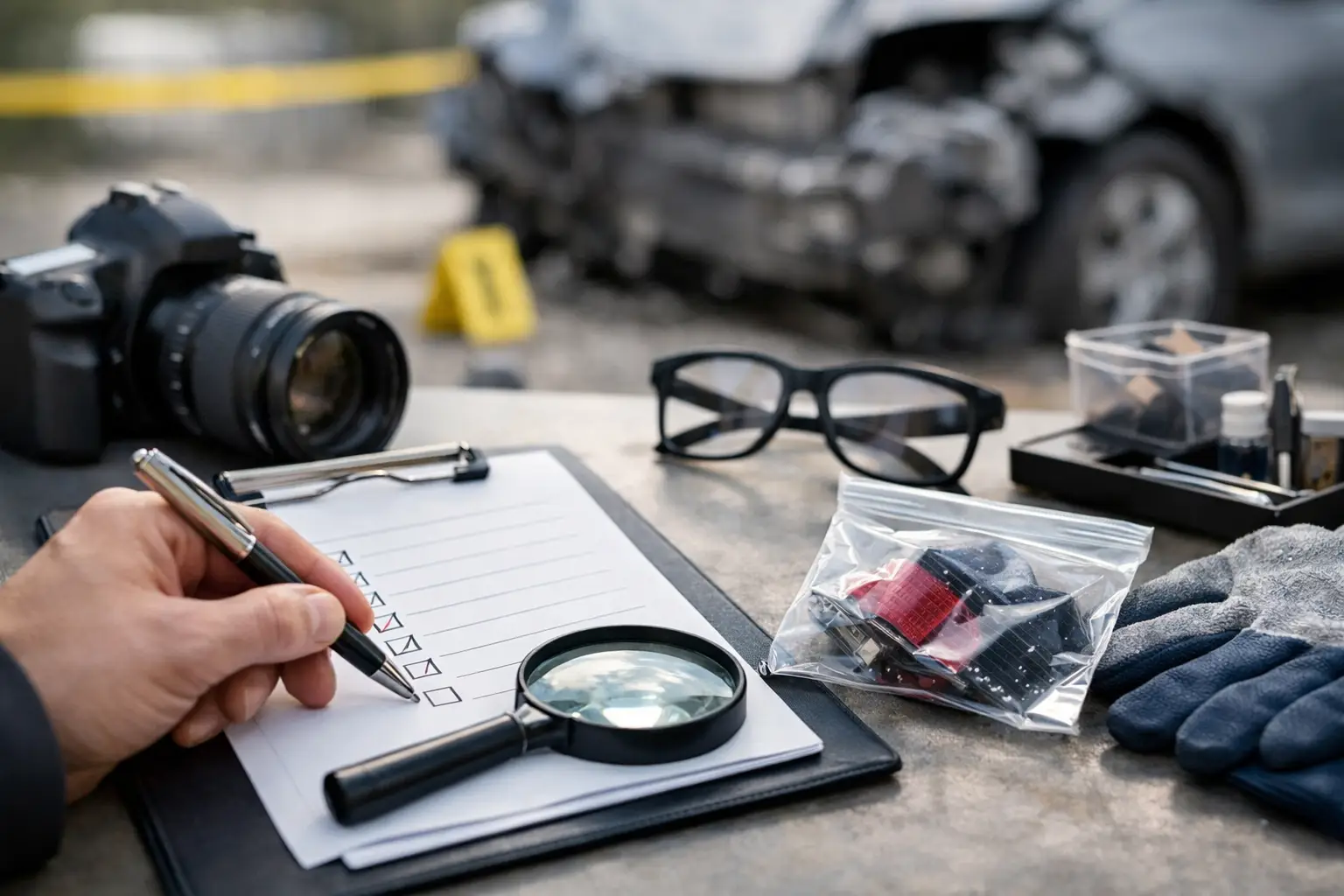
Accident Investigation Evidence Checklist Essentials
The most valuable evidence after an accident is often gone before anyone realizes it matters. A vehicle is repaired, a spill is cleaned, a damaged product is discarded, or a witness stops answering calls. An accident investigation evidence checklist helps preserve the facts while they are still available, creating a reliable record for insurance, litigation, workplace review, or a private claim.
For a serious injury, disputed liability, suspected fraud, or a high-value loss, evidence collection should be deliberate. The goal is not to gather every possible document. It is to identify what can establish how the accident occurred, who had responsibility, what losses followed, and whether the evidence can withstand scrutiny later.
Start With Safety and the Scene
No piece of evidence is worth putting another person at risk. Call emergency services when anyone is injured, a roadway is unsafe, a crime may have occurred, or property damage creates a hazard. Follow instructions from police, firefighters, medical personnel, and property management.
Once the scene is safe and you have a legal right to be present, document conditions before they change. Photographs and video should show the overall setting first, then move closer to the relevant details. For a vehicle collision, that may include the road layout, traffic controls, weather, debris, vehicle positions, impact points, and visible damage. In a premises incident, it may include the walking surface, lighting, warning signs, entrances, exits, cameras, and nearby maintenance equipment.
Do not edit original images, add filters, or rely on screenshots alone. Keep the original files with their metadata whenever possible. A clean copy can be shared with counsel or an insurer, but the original may later help establish when and where it was created.
Accident Investigation Evidence Checklist for the First 48 Hours
The first two days frequently determine whether critical evidence can be preserved. Memories fade quickly, surveillance systems overwrite footage, and businesses may repair the very condition that caused the incident. Use this accident investigation evidence checklist as a practical starting point:
- Scene photographs and video, including wide views, close-ups, measurements, lighting, weather, and any changing conditions.
- Names, contact information, and brief contemporaneous accounts from witnesses, first responders, employees, drivers, or other involved parties.
- Official records, such as police reports, incident reports, dispatch logs, fire reports, workplace reports, and property-management records.
- Medical records, treatment instructions, bills, photographs of injuries, and a clear timeline of symptoms and care.
- Physical items connected to the event, including damaged property, clothing, equipment, parts, packaging, or safety devices.
- Digital records, including surveillance video, dash camera footage, vehicle data, phone photographs, text messages, call logs, GPS information, and relevant social media content.
- Insurance information, vehicle registrations, business details, contracts, maintenance records, inspection logs, and prior complaints when relevant.
A checklist is only useful if it is tailored to the type of accident. A construction-site injury may require subcontractor agreements, training records, jobsite photographs, safety meeting logs, and equipment inspection documentation. A pedestrian collision may require nearby business video, signal timing information, rideshare records, and an assessment of sight lines. The evidence should follow the facts, not a generic template.
Preserve Physical Evidence Without Altering It
Physical evidence can answer questions that witness statements cannot. A broken ladder, failed brake component, torn garment, defective product, or damaged safety restraint may reveal how an incident happened. However, handling these items carelessly can compromise their value.
Avoid repairing, cleaning, discarding, or materially changing an item that may be relevant. Store it in a secure location and photograph it from multiple angles before moving it if conditions allow. Record who found it, where it was located, when it was collected, and every person who later handled it. This record is known as chain of custody.
Chain of custody is especially important where fraud, criminal conduct, product failure, or litigation is possible. It does not need to be complicated, but it must be consistent. A professional investigator can document the item, arrange appropriate storage, and coordinate with qualified experts when technical inspection is needed.
Secure Video Before It Is Overwritten
Surveillance footage is among the most time-sensitive forms of accident evidence. Many systems automatically overwrite recordings within days or weeks. The relevant footage may be held by a store, apartment building, neighboring business, school, transit operator, homeowner, or city agency.
Identify cameras that may have captured not only the impact or fall, but also the minutes leading up to it. Footage before an accident can show vehicle speed, a hazard developing, employee activity, a person’s path of travel, or whether warning measures were present. Footage afterward can document response efforts, statements, and changes to the scene.
A prompt written preservation request may be appropriate, particularly when counsel is involved. The right approach depends on the circumstances and the entity holding the recording. Do not assume a verbal request is enough, and do not attempt to access private systems without authorization.
Treat Witness Accounts as Perishable Evidence
Witnesses can be decisive, but only if their observations are captured accurately and without pressure. Obtain complete contact information and ask open-ended questions: What did you see? Where were you standing? What did you notice before the incident? Avoid supplying facts or asking questions that suggest an answer.
A brief statement taken soon after the event can be far more useful than a recollection gathered months later. At the same time, a witness may be stressed, distracted, or mistaken. Their account should be evaluated alongside physical evidence, video, records, and scene conditions rather than treated as conclusive on its own.
Professional interviews are particularly valuable when accounts conflict or when a key witness is reluctant to speak. Experienced investigators know how to document statements, assess consistency, and preserve information without escalating an already sensitive matter.
Build a Clear Timeline and Records File
Accident cases often become confusing because documents are collected without a chronology. Create a simple timeline beginning before the incident when relevant. Include the date, time, location, who was involved, what occurred, emergency response, medical care, conversations, repairs, and communications with insurers or employers.
Keep records in their original form. Save emails as emails, retain text-message threads rather than isolated messages, and preserve complete documents instead of cropped excerpts. Note the source of each item and the date you received it. This makes it easier for an attorney, insurer, expert, or investigator to determine what is authentic and what may be missing.
Be cautious about public statements. Social media posts, casual messages, and recorded conversations can be misunderstood or used out of context. It is generally wiser to discuss the facts with your attorney, insurer, or authorized investigator than to debate responsibility online.
Know When Professional Investigation Is Necessary
Some accidents are straightforward. Others involve disputed accounts, serious injuries, commercial vehicles, workplace conditions, suspected staged losses, missing video, or a party with far greater resources. In those matters, waiting can be costly.
A licensed investigator can conduct lawful scene documentation, locate and interview witnesses, identify potential video sources, analyze publicly available digital evidence, verify records, and prepare organized findings for counsel or a client. The investigator’s role is fact development, not speculation. Credible evidence is collected with care, documented thoroughly, and presented objectively.
At Kay & Associates Investigations, accident investigations are handled with the discretion and discipline sensitive cases require. The appropriate strategy depends on the type of loss, the evidence at risk, and whether the matter may proceed to insurance review or litigation.
If an accident has left unanswered questions, preserve what you can now. The most useful evidence is rarely the loudest or most dramatic item. It is the fact that was collected lawfully, recorded accurately, and protected before it disappeared.






Locating and Serving a Person Hard to Find for Legal Action says: